Nefertum: The God of the Lotus, Rebirth, and Perfumes
Nefertum: The God of the Lotus, Rebirth, and Perfumes
by Hasan Andrea Abou Saida
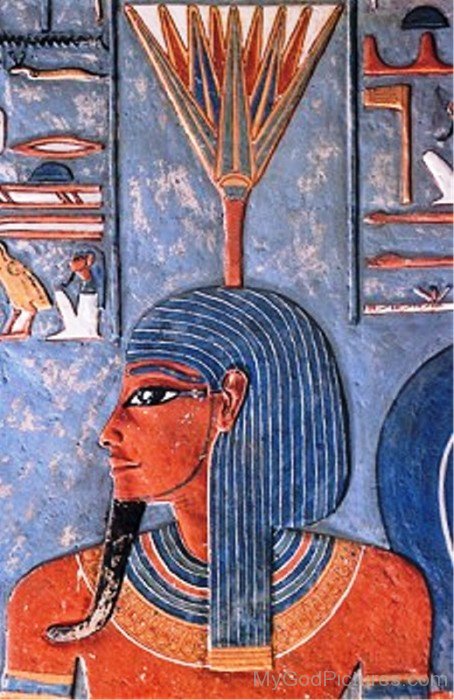
Nefertum, though less well-known than deities such as Ra or Osiris, holds a significant place in the Egyptian pantheon. Associated with rebirth and beauty, Nefertum is revered as the god of the lotus, a symbol of purity and regeneration. His name, derived from the ancient Egyptian “nfr-tm,” meaning “He Who Is Perfect,” reflects his connection to beauty and divine perfection, embodying the vitality of nature and the freshness of life. Nefertum is closely linked to perfumes and essences, symbols of his role in regeneration.
The lotus, a central element in Egyptian religion, represents the cycle of life and death. This flower, which opens in the morning and closes at sunset, was considered a symbol of daily rebirth, closely connected to the sun god Ra. According to legend, Nefertum eased Ra’s suffering by bringing him a sacred lotus to comfort him. As the god of the lotus, Nefertum was also venerated as a deity of creation and rebirth. Some depictions show him emerging from the lotus, symbolizing the birth of the sun each morning. In some versions of the creation myth, Nefertum rises from the primordial chaos in the form of a lotus flower, bringing with him the sun and initiating life.
In the Pyramid Texts, Nefertum is called “Lotus Flower at the nose of Ra,” while in the Book of the Dead, known as the “Papyrus of Ani,” he appears among the 42 judges of the tribunal of the afterlife:
“Rise like Nefertum from the blue water-lily at the nostrils of Ra, and you shall come forth upon the horizon every day.”
The celestial lotus referred to is the flower from which the sun is born, represented by Harpocrates, or the child Horus. The idea of resurrection was closely linked to the lotus, and Ani, aspiring to transform into a lotus, wishes to be reborn into a new body and ascend to the sky like the Sun god. One of the epithets of Nefertum was “Young Ra,” representing the rising sun.
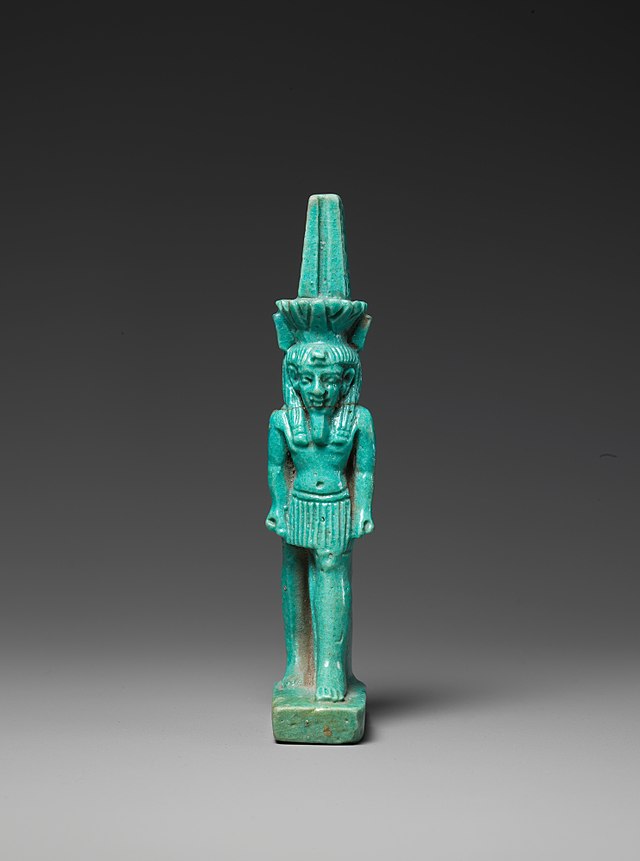
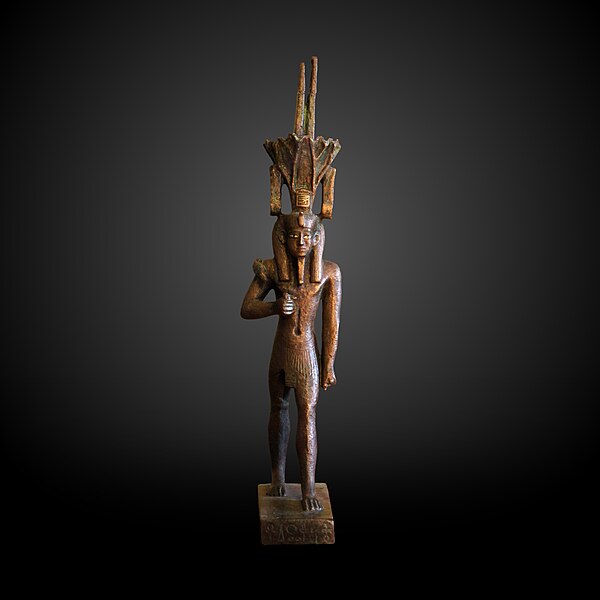
Nefertum is often depicted as a young man wearing a lotus-shaped headdress, sometimes adorned with feathers or serpents, emphasizing his connection to vegetation and vitality. In other representations, he appears as a man with the head of a lion, in association with the lion-headed goddesses. Nefertum is also part of the divine triad of Memphis, together with Ptah and Sekhmet, and is considered their son. In this context, Nefertum acts as a mediator, uniting Ptah’s creative power with Sekhmet’s destructive force, thus embodying the ability to create and destroy, heal and protect. In other traditions, Nefertum is considered the son of the goddess Bastet. Temples dedicated to him were located in Thebes and in the Nile Delta, where he was venerated as a symbol of rebirth and beauty. In Buto, however, Nefertum was seen as the son of the serpent goddess Wadjet.
“Nefertem, the youthful god of the lotus blossom, was associated with the rising sun and with the perfumes and healing properties of the lotus flower. Often regarded as the son of Ptah and Sekhmet (or Bastet), he could also appear with a lion’s head, reflecting his leonine connections. As a symbol of rebirth and beauty, he was invoked in daily life for health and well-being and in funerary contexts for the regeneration of the deceased.”
— Wilkinson, R. H. (2003). The Complete Gods and Goddesses of Ancient Egypt. Thames & Hudson.
Like many other Egyptian deities, Nefertum was also subject to syncretism. During the New Kingdom, he was associated with deities such as Ra and Atum, becoming part of an increasingly complex syncretic pantheon. However, the cult of Nefertum was not confined solely to great temples or official ceremonies. In daily life, Egyptians also venerated Nefertum as a protector of health and beauty. Lotus-shaped amulets linked to Nefertum were worn for protection and as symbols of rebirth. In funerary rituals, the god was invoked to protect the soul of the deceased, symbolizing the soul’s regeneration and accompanying it on its journey to the Duat, the Egyptian afterlife.
From the first rays of the sun emerging from the primordial lotus to the delicate fragrances that perfumed temples and homes, Nefertum embodied the essence of renewal, beauty, and vitality in ancient Egypt. As both the youthful sun and the fragrant blossom, he united creation and healing, light and protection, in a single divine figure. His presence in myth, art, and daily life reveals a deity who was not only part of the grand cosmic order but also a personal guardian of health and spiritual rebirth. Even today, the image of Nefertum rising from the lotus remains a powerful symbol of life’s constant capacity to renew itself, echoing the eternal cycle of dawn over the Nile.
Bibliography
Budge, E. A. W. (1913). The papyrus of Ani: A reproduction in facsimile, Volume 1: Book of the dead. Putnam.
Hornung, E. (1982). Conceptions of God in Ancient Egypt: The One and the Many (J. Baines, Trans.). Cornell University Press. (Original work published 1971)
Mestica, G. S. (2003). Universal dictionary of mythology [Dizionario universale di Mitologia]. Bompiani.
Tosi, M. (2004). Encyclopedic dictionary of the deities of ancient Egypt [Dizionario enciclopedico delle divinità dell’antico Egitto]. Ananke.
Wilkinson, R. H. (2003). The complete Gods and Goddesses of Ancient Egypt. Thames and Hudson.