The Celtic and initiatory origins of Snow White
The Celtic and initiatory origins of Snow White
by Hasan Andrea Abou Saida
Folk tales, as we have already demonstrated in our previous article on Little Red Riding Hood, are memories of ancient initiatory ceremonies celebrated among primitive tribal communities. According to the thesis of scholars Vladimir Propp and Anselmo Calvetti, most of the building blocks of fairy tales stem from “primitive” rites and myths of clans, from youth initiation cycles, and from representations of the initiate’s death and rebirth. ne among these magical and popular fairy tales—where the memory of an initiatory rite is still alive—is the story of Snow White. The Brothers Grimm themselves considered fairy tales as remnants of ancient myths that survived in popular memory and were passed down orally. Jacob Grimm wrote to his friend Achim von Arnim in 1812 on this subject:
“I am firmly convinced that all the fairy tales in our collection … were already being told thousands of years ago … in this sense all fairy tales have been codified as they are for a very long time, while they move from here to there in infinite variations.”
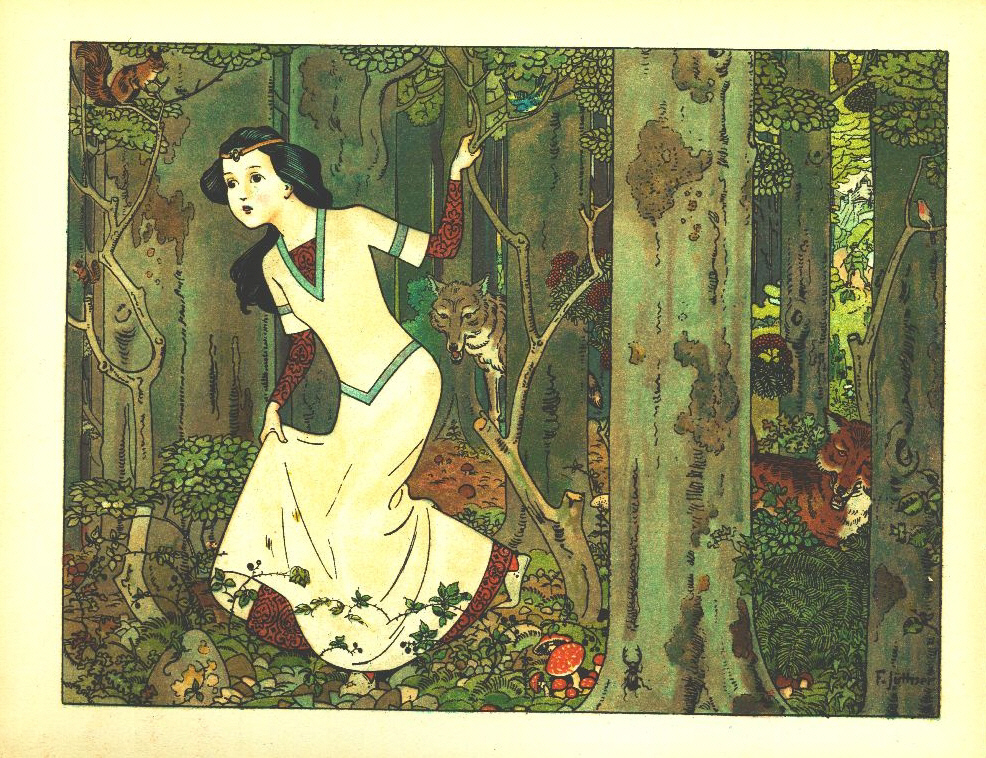
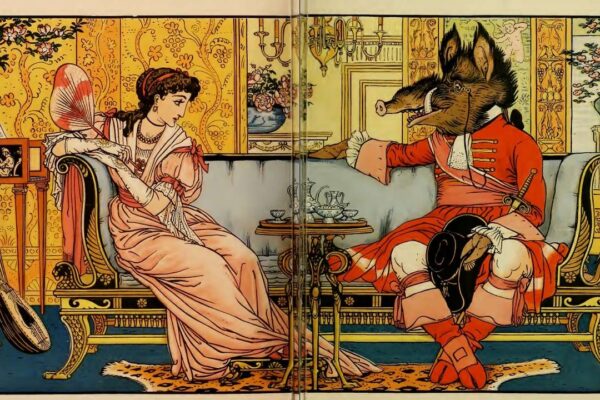
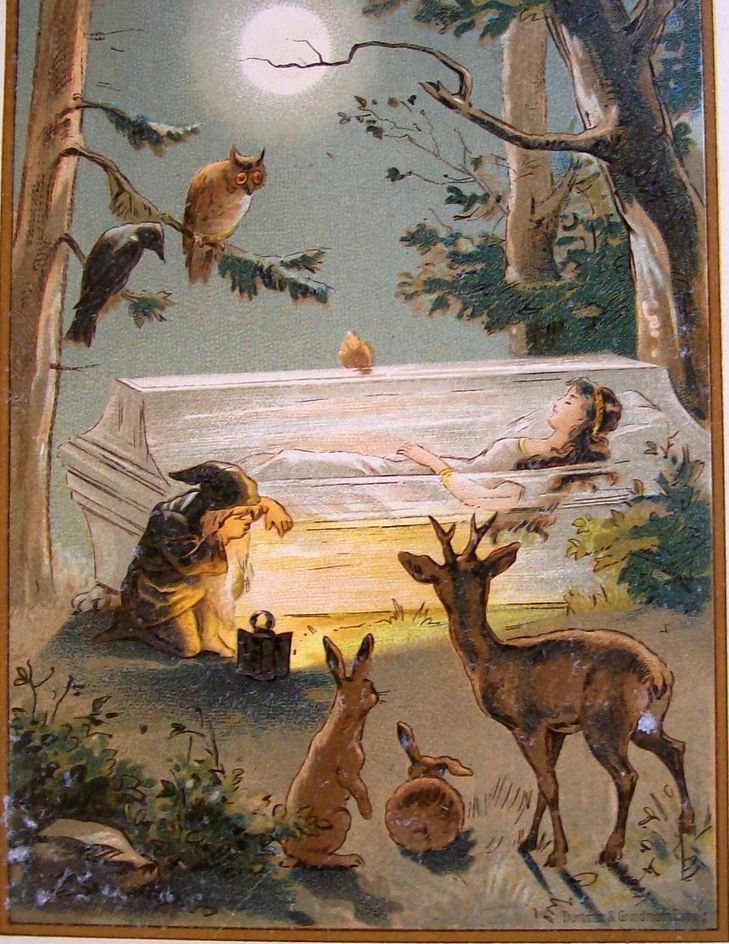
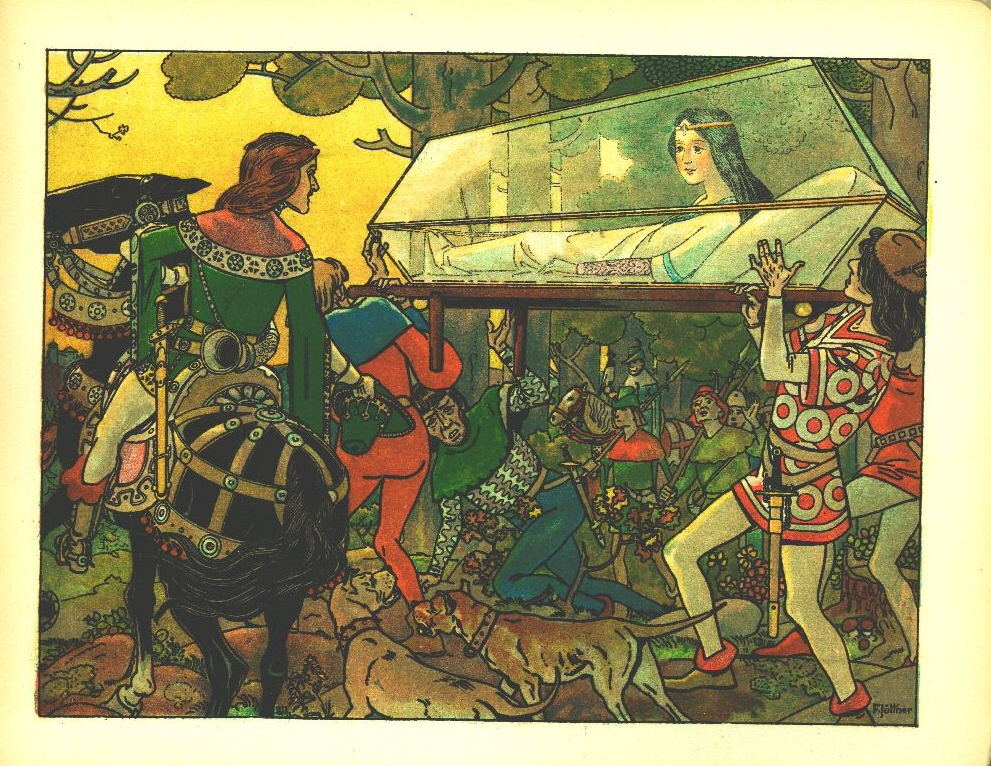
In the earliest version of the tale, as transcribed by the Brothers Grimm in their 1812 book Kinder und Hausmärchen, the mother of the future girl pricks her finger on a spindle and dreams of having a child “white as snow, black as ebony, red as blood.” The woman then becomes pregnant and gives birth to a girl. When Snow White turned seven, her mother became envious of her beauty. She asked a hunter to kill her and bring back the girl’s lungs and liver to cook with salt and pepper and eat them. However, moved by pity, the hunter set Snow White free in the woods and brought back the innards of a young boar as proof of the deed. The queen ate them, believing they were the girl’s, but discovered the hunter’s deception. Snow White fled into the forest and took refuge in the house of the Seven Dwarfs. In an attempt to kill her, her mother disguised herself as an old peddler and gave Snow White a poisoned comb. The dwarfs removed it just in time. The next attempt involved offering a poisoned apple. Upon biting it, Snow White collapsed as if dead. The dwarfs, struck by her beauty and unsure how to bury her, placed her in a glass coffin engraved with her name, keeping her “for a very, very, very long time.” A prince, passing by, fell madly in love with her corpse, requesting the dwarfs to give it to him. He had the coffin placed in his castle in his private quarters. The prince gazed at her all day and, when he had to leave the coffin’s side, fell into deep melancholy and couldn’t taste a single bite. Finally, his servants, tired of carrying the coffin back and forth, opened it and jostled her gently. Snow White expelled the piece of apple and returned to life. The two then decided to marry. When the mother was invited to their wedding, she came intending to kill her daughter once more—but a dreadful vengeance awaited her: she was forced to wear red-hot iron shoes and dance until her feet were horribly burned and she collapsed dead 1.
The evident traces of an ancient female initiatory rite emerge clearly throughout the fairy tale of Snow White. The story shares profound analogies and similarities with an equally ancient Celtic tale of Deirdre, an Irish mythological heroine. Deirdre was the daughter of the royal bard Fedlimid mac Daill. Before her birth, Cathbad—the chief druid at the court of Conchobar mac Nessa, King of Ulster—prophesied that Fedlimid’s daughter would become extraordinarily beautiful, but that kings and lords would wage war because of her, much blood would be shed, and the three greatest warriors of Ulster would be forced into exile for her sake. Many urged Fedlimid to kill the baby at birth, but Conchobar, enthralled by the description of her beauty, chose to raise her in a remote fortress, shielding her from seeing any man until the king should personally come for her in marriage. Deirdre grew safely in the fortress until one winter’s day, when a caretaker killed a fawn at the gate and Deirdre saw a crow drinking the blood on the snow. She asked her nursemaid:
“My dear, be honest with me. Where is that man who is as white as snow, whose cheeks are red as blood and whose hair is black as a raven’s wings? I want to love him, and he must love me.”
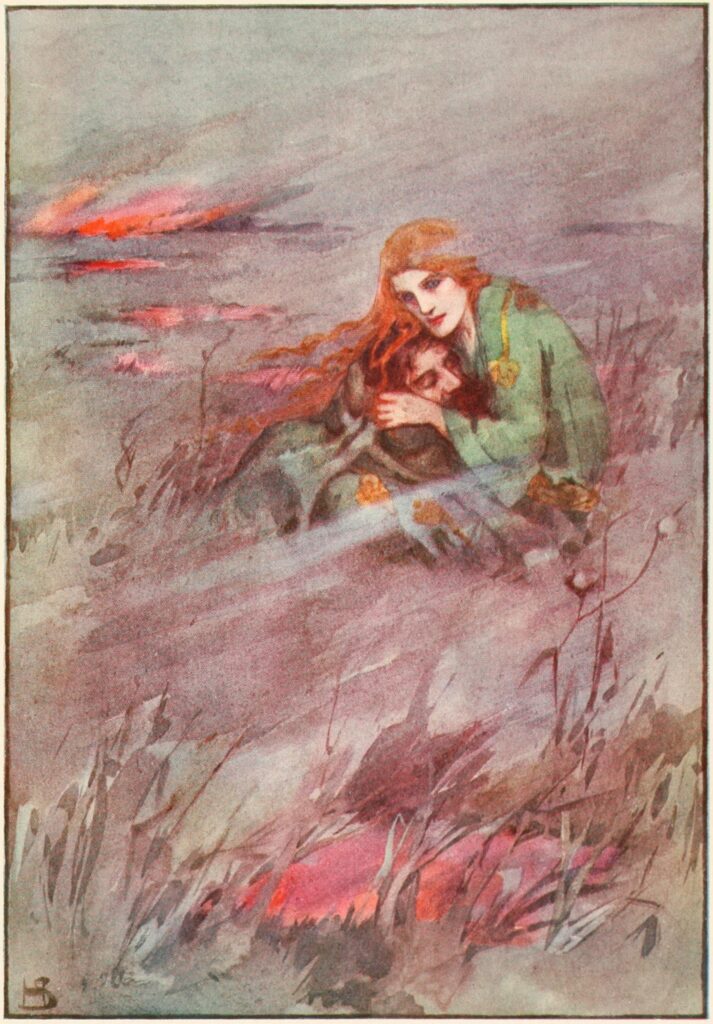
Her nursemaid told her she was describing Naoise, a handsome young warrior and bard at Conchobar’s court. Deirdre met Naoise; they fell in love. To escape Conchobar, Deirdre, with Naoise’s brothers Ardan and Ainnle, and the sons of Uisnech, fled to Scotland, where they lived peacefully hunting and fishing. But Conchobar, humiliated and enraged, sent Fergus mac Róich with a false promise of mercy, luring them back. Deirdre and Uisnech’s sons sought refuge at Emain Macha thanks to Fergus, but Conchobar dispatched his warriors to attack the House of the Red Branch, killing Naoise. Conchobar then married Deirdre, but one year later, devastated by grief, she threw herself from a chariot in despair and died 2.
Although the narratives differ, their esoteric dimensions are likely connected to feminine initiatory rites. According to Hungarian anthropologist Angelo Brelich, female initiation—unlike male—occurs in two transformative moments: puberty, marked by menarche, and marriage (and consequently childbirth), which completely alters both physiological and social standing. Female initiations are often associated with puberty and nuptial rites, blending the two. As with male initiations, the most important ritual element in female initiation is segregation—either into the forest or a hut. The young initiate is entrusted to an elder or elders who guide her in the feminine roles, particularly regarding sexuality and motherhood. During segregation, the initiate learns ritual songs, dances, and female crafts such as spinning and weaving. The final ceremony is often a procession and women’s acclaim, introducing the initiate to the community as an adult and ready to assume her social role as a woman 3. Traces of a primitive initiatory institution, predating the pre-Mycenaean era, can be found in the Athenian ceremonies of the 5th century BC. In the verses of Aristophanes’ Lysistrata, the women of the chorus, addressing all the citizens, praise the education they had received from the city-state, saying:
“As soon as I turned seven I served as arrephoros;
afterwards, at ten years old, I was aletris, in the service of the archegetis;
and later, wearing the saffron robe, I was arktos in the Brauronia;
and I served as kanephoros, finally becoming a beautiful maiden, wearing a string of dried figs.” (Aristophanes, Lysistrata 641).
This famous passage represents the most important testimony regarding the arrephoroi.
The Arrephoric ritual was part of a dense series of religious festivals held throughout the year, with a “preparatory” character aimed at the Panathenaea, following more archaic ritual schemes likely connected to the cycles of Nature. The Arrephoroi were young girls between the ages of seven and twelve who acted as acolytes and served Athena on the Acropolis of Athens, being entrusted with the performance of specific rituals.
The Arrephoria was celebrated in the month of Skirophorion (mid-June to mid-July) in honor of Athena Polias. According to the Greek writer and geographer Pausanias the Periegete, two virgin arrephoroi, between seven and eleven years old, already dedicated to the service of the Goddess, were chosen during one night in the month of Skirophorion. After the priestess of Athena had given them secret objects to carry on their heads (objects unknown even to the bearers themselves), they were led through a natural underground passage located beneath the sanctuary of Aphrodite in the Gardens. There they deposited the sacred objects and received something else to bring back outside upon their return. The selected arrephoroi, during their seclusion on the Acropolis of Athens, wore a white robe adorned with gold, and their diet was based on a particular type of flatbread.
They were also responsible for weaving the peplos (the traditional dress of Greek women), which every four years was offered to Athena Polias to renew her clothing 4. The term ἀρρηφόροι, along with its variants ἐρρηφόροι and ἐρσηφόροι, of obscure etymology, is probably an archaic synonym of κανηφόροι (“basket bearers”).
From Greek inscriptions, arrephoria rites are also attested for other deities, such as Athena and Pandrosos, Ge Themis, Eileithyia, Demeter and Kore, as well as during the Epidaurian festivals. According to the philologist Ludwig Deubner, the two events of descent and ascent took place in different periods: the first would have been held in June–July and would have consisted of an offering to the Goddess to obtain fertility, while the second should be placed in autumn, a season associated with descent into the underworld and with death 5.
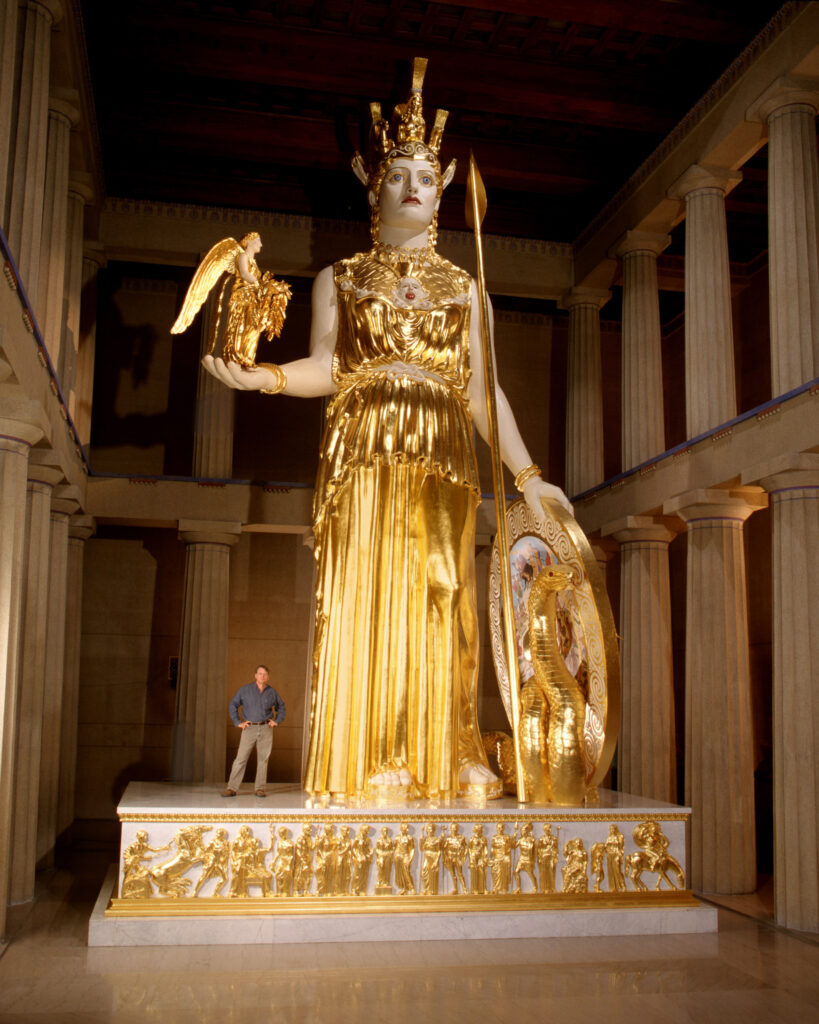
n the fairy tale of Snow White, for example, the mother is sewing beside an ebony piece of furniture, pricks her finger, and three drops of blood fall onto the snow. She then declares that the child she would give birth to would bear three colors—white as snow, red as blood, and black as ebony—the same that appear in the Irish myth of Deirdre.
The sequence of these colors symbolically recalls the three phases of the alchemical Work: Nigredo, Albedo, and Rubedo—the initiatory path of inner transformation. In Snow White, the young girl leaves her paternal home due to the malice of her mother/stepmother at the age of seven, thus taking the first step on a feminine initiatory journey within the community. The killing and consumption of the boar’s parts by Snow White’s mother/stepmother represents the symbolic killing of the initiate through the substitutionary sacrifice of an animal, whose flesh is consumed by the officiants of the rite. The substitution of Snow White with a young boar—emerging suddenly from the forest thickets before the hunter—is connected to Celtic tradition and to the symbolic meaning of the animal 6. For the Celts, the boar is an animal with a highly complex symbolism, connected to wisdom, knowledge, healing, truth, and loyalty; as a messenger between the Underworld and the human realm, it represents the druidic priestly class. The boar is also a bearer of fertility and fecundity, a symbol of the Mother Goddess—the divine Nature of the earth tied to the lunar cycle—but it is also linked to the solar cycle, to male deities, to reproductive frenzy, and to the aggressiveness of warriors.
It thus becomes a symbol of abundance, nourishment, hospitality, festivity, and social gatherings, as well as fertility, health, protection from danger, power, and vitality 7. In the myth of Deirdre, however, the old caretaker kills a fawn as a ritual sacrifice—an animal spirit associated with the Mother Goddess, the cult of fertility, rebirth, and the druidic caste. For the Celts, deer were regarded as intermediary spirits between the world of the gods and the world of humans, acting as messengers and guides to the Otherworld 8. Like every initiate, Snow White wanders through the forest in search of herself—the dwelling place of the Lord of Animals, the Spirits of Nature, and the Ancestors.
Tired and hungry, the young girl comes upon the little house of the Seven Dwarfs, a chthonic place where the initiate must remain in isolation for a long period, just as Deirdre did in the fortress and the Arrephoroi on the Acropolis of Athens.
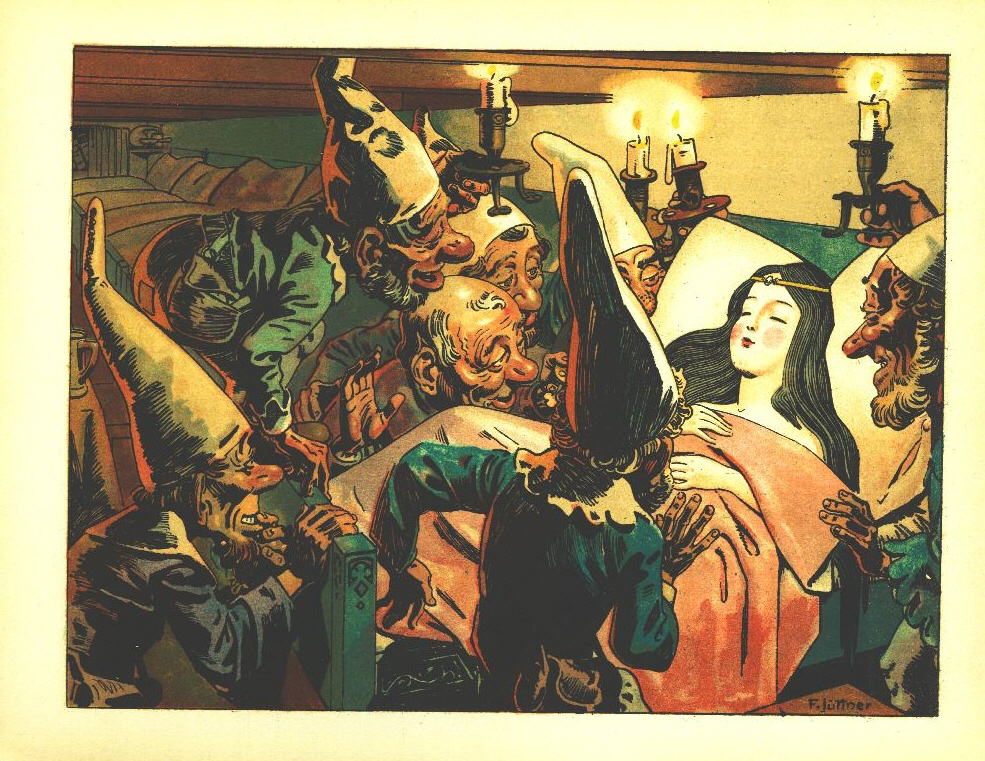
or Snow White, this marks the beginning of her apprenticeship in the domestic arts, preparing her to become a future wife and woman within the dwarfs’ household. The Seven Dwarfs work all day, returning home only at sunset, and during the day they search for precious metals in the underground tunnels. The dwarfs are spirits of the Earth and representations of the Clan’s Ancestors. Just like an initiate dwelling in a ritual hut, Snow White is placed under the protection of the Ancestors, who guide her along her initiatory path.
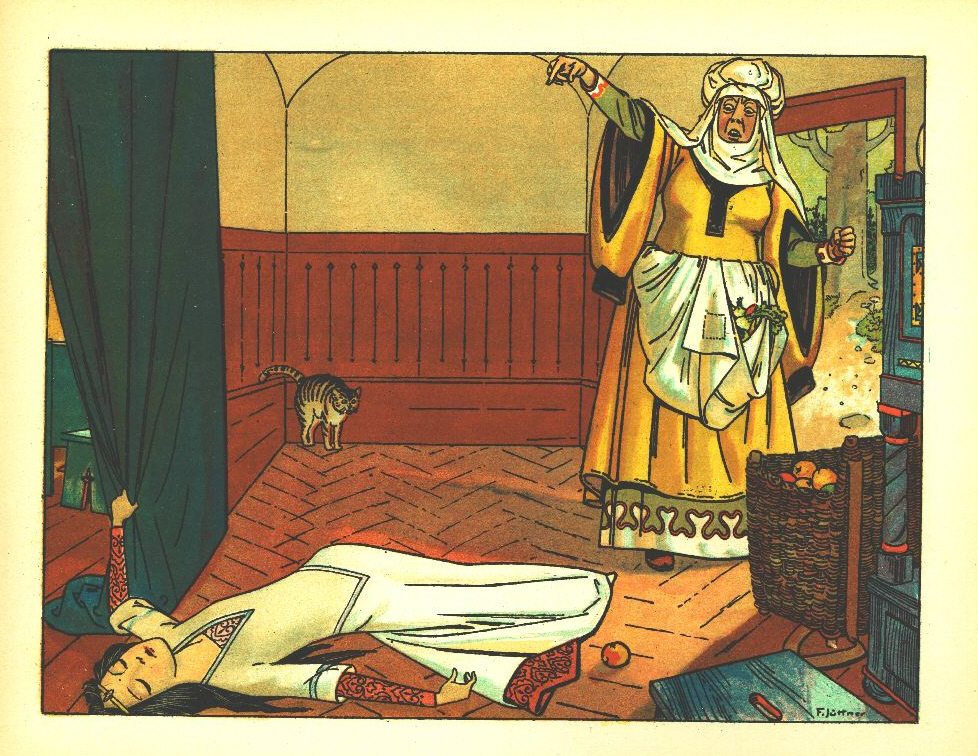
Finally, the fairy tale recounts the death of Snow White caused by a poisoned apple, given to her by her mother/stepmother disguised as a peasant woman. Here we find another ritual death, marking yet another fundamental stage in the spiritual journey of the initiate—one of a higher grade than that of the Arrephoroi.
The poisoned apple causes the initiate to fall into an altered state of consciousness, a deep sleep, confirming the use, during primitive initiatory rites, of a hallucinogenic and psychotropic substance such as the Amanita muscaria mushroom or a fermented apple. In this way, the spirit of the initiate can leave the body and meet the spirits and Ancestors in the Spirit World. Upon awakening—rebirth—the initiate Snow White is finally admitted into the community as an adult member and as a woman capable of giving life 9.
In conclusion, the fairy tale of Snow White and the Celtic myth of Deirdre conceal within their narratives profound primordial initiatory secrets connected to the feminine world and to the power of the Great Mother.
1 Grimm, J. e W. (1993). Fiabe del focolare. Milano: CDE.
2 Monaghan, P. (2004). The Encyclopedia of Celtic Mythology and Folklore. New York: Facts On File, p. 122.
3 Per maggiori approfondimenti vedi: Brelich, A. (2008). Le iniziazioni (E. riuniti U. Press, ed.).
4 Arreforie. Wikipedia, L’enciclopedia libera, https://it.wikipedia.org/wiki/Arreforie (ultima visita 14/06/2021).
5 ARREFORIE. Enciclopedia Italiana, https://www.treccani.it/enciclopedia/arreforie-o-erreforie_%28Enciclopedia-Italiana%29/ (ultima visita 14/06/2021).
6 Calvetti, A. (1987). TRACCE DI RITI INIZIATICI FEMMINILI NELLE FIABE DELL’ORSA, DI PELLE D’ASINO E DI BIANCANEVE. Lares, 53(1), 111-124. Retrieved June 14, 2021, http://www.jstor.org/stable/44630337
7 Taraglio, R. (2005). Il vischio e la quercia : la spiritualità celtica nell’Europa druidica (Nuova). Torino: L’età dell’acquario, p. 344.
8 Ivi, pp. 340 – 342.
9 Calvetti, A. (1987). TRACCE DI RITI INIZIATICI FEMMINILI NELLE FIABE DELL’ORSA, DI PELLE D’ASINO E DI BIANCANEVE. Lares, 53(1), 111-124. Retrieved June 14, 2021, http://www.jstor.org/stable/44630337
Bibliography
Brelich, A. (2008). Le iniziazioni (E. riuniti U. Press, ed.).
Eliade, M. (2020). La nascita mistica: riti e simboli d’iniziazione. Brescia: Morcelliana.
Grimm, J. e W. (1993). Fiabe del focolare. Milano: CDE.
Monaghan, P. (2004). The Encyclopedia of Celtic Mythology and Folklore. New York: Facts On File.
Wasson, G. (1968). Soma: divine mushroom of immortality. New York: Harcourt, Brace & World.