Back

Our articles

The Gods’ First Face: Totems, Myths, and the Ancient Sky by Hasan Andrea Abou Saida Before they were statues, deities, Read more
From the Trivium to the Quadrivium: The Seven Liberal Arts as Keys to Medieval Magic by Hasan Andrea Abou Saida Read more
The Inner Beast: Archetypal Symbols and Rites of Passage in Beauty and the Beast by Hasan Andrea Abou Saida he Read more
Perfumes and Astrology: The Zodiac Scents of the Natal Chart The creation of a perfume is not merely a sensory Read more
Reincarnation, Ancestrality, and Initiations: The Vision of the Soul in Ancient Rome by Hasan Andrea Abou Saida Reincarnation is an Read more
Bes: The Egyptian God, Protector of the Hearth and Joy by Hasan Andrea Abou Saida In the ancient Egyptian pantheon, Read more
Nefertum: The God of the Lotus, Rebirth, and Perfumes by Hasan Andrea Abou Saida Nefertum, though less well-known than deities Read more
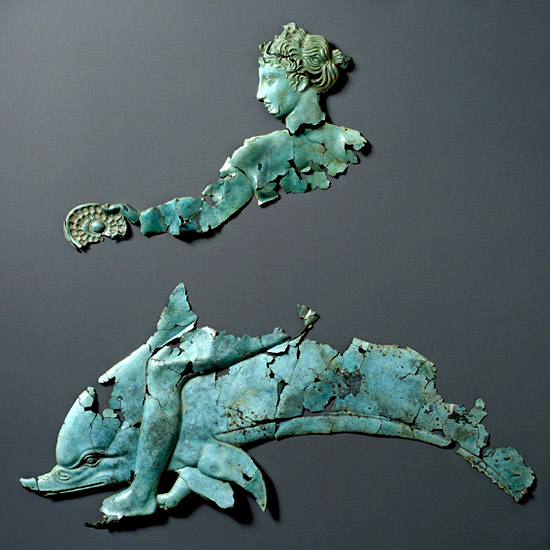
Mephitis: Italic Guardian of the Passages Between Life and the Otherworld by Hasan Andrea Abou Saida Mephitis (also spelled Mefitis, Read more
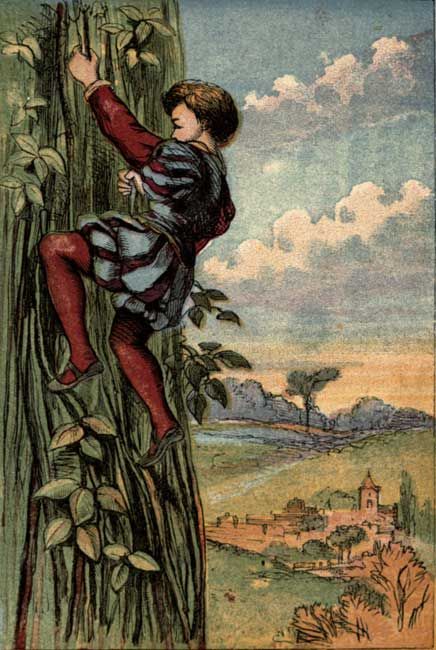
From archaic roots to folk tradition: an analysis of “Jack and the Beanstalk” by Hasan Andrea Abou Saida Fairy tales Read more
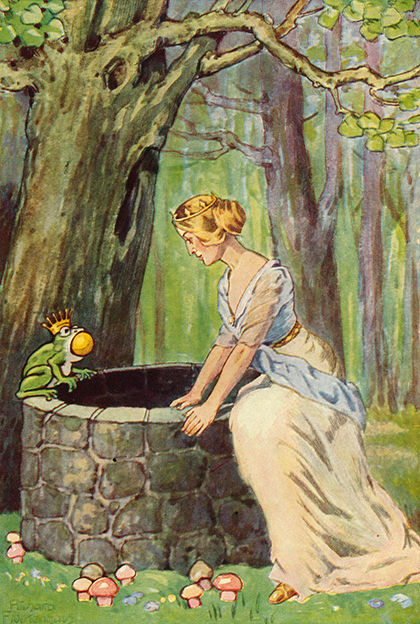
The Frog Prince: a journey of inner transformation and lunar symbolism by Hasan Andrea Abou Saida The tale of the Read more

The Gods’ First Face: Totems, Myths, and the Ancient Sky

by Hasan Andrea Abou Saida

Before they were statues, deities, and later saints whose names were carved in stone, the divine had, in ancient times, taken on the face of an animal. Totemism, present in many cultures across every continent, is not merely a primitive superstition, but a universal symbolic structure—an archaic language through which humanity interpreted its place in the universe. The totemic animal was ancestor, protector, spiritual guide, but also a bridge between earth and sky, between microcosm and macrocosm. This red thread runs through the ages, transforming without ever breaking: the bison or aurochs became the sacred bull, ascended to the heavens as a zodiacal symbol, and finally became an icon upon a Christian altar—yet its archetypal core has remained unchanged through the centuries.

The pioneering studies of James George Frazer (Totemism, 1887) and Claude Lévi-Strauss (Le Totémisme Aujourd’hui, 1962) show how totemism functioned at once as a religious system, a social structure, and a symbolic code. In many tribal societies, clan membership was defined by the totemic animal, and marriage rules, food taboos, and rites of passage revolved around it.

“Totemism is the projection of society onto a cosmic plane: the social order is reflected in the natural order.”
— Lévi-Strauss, Totemism Today, p. 34

The totem was not chosen at random: it represented an original bond between the group and a natural force perceived as kindred—an archetype of universal scope. In this sense, totemism emerges as both proto-religion and proto-science, capable of ordering the world and giving meaning to collective life.

Capitoline Wolf – Etruscan bronze sculpture, dated to 490–480 BC

As Mario Alinei notes (From Totemism to Popular Christianity), totemism did not vanish with the advent of the great religions; rather, it changed form and was preserved through the dialectal language of the people.
The sacred animal was transfigured into a patron saint, the mythical hero into a Christian martyr, the tribal feast into a liturgical celebration. The underlying logic remained the same: humanity seeks in otherness—whether animal, divine, or heroic—a reflection of its own identity and a mediator with the sacred.

Thus, Saint Ursus, a figure straddling history and legend in the Valdostan tradition, stands as a perfect example of archetypal continuity. His iconography, popular narratives, and even the calendar of his feast preserve pre-Christian symbolic elements rooted in the animal and agrarian world, with particular reference to the totemic figure of the bear.
The bear, an archetype of strength, protection, and seasonal cycles, was central to ancient cults in the Alps and much of Europe. Among the Celts, it was associated with the goddess Artio, lady of abundance and protectress of wildlife, and with the god Artaios, linked to hunting and the sustenance of communities. The very name “Ursus” suggests a totemic origin: not merely a nickname, but the sign of a spiritual and symbolic bond with the animal.

The passage from the totemic bear to the agrarian deity and finally to the Christian saint occurs through a process of functional transformation:

  • In the totemic phase, the bear represents natural power and the guardian of the community.
  • In the pagan phase, it becomes a deity of hunting, fertility, and the protection of herds.
  • In the Christian phase, the saint inherits the role of patron of domesticated animals and the countryside, blessing seeds and watching over the harvests.

The feast of Saint Ursus, celebrated at the end of January, falls close to Imbolc, the ancient Celtic midwinter festival dedicated to Brigid, during which the rebirth of light was invoked and seeds and animals were blessed. In its new Christian guise, the saint becomes the guardian of the seasonal threshold—the one who guides the community from the darkness of winter to the promise of spring.

Saint Ursus on the wooden antependium – Carving from the Collegiate Church of Aosta

This process of archetypal transposition is not an isolated case. Another emblematic example is that of Saint Christopher, the “Christ-bearer.” In some medieval depictions, he appears with cynocephalic (dog-headed) features, recalling ancient psychopomp deities such as the Egyptian god Anubis. Originally, the animal totem of the dog symbolized the guardian of thresholds, able to protect against dangers and guide souls through passages between worlds. Just as the bear was the guardian of the community and the agricultural cycle, the dog was the guardian of boundaries—watchful against chaotic forces and a sure guide through the territories of the unknown.

Cynocephalic Saint Christopher – Byzantine icon preserved in the Christian Museum of Athens

Finally, Saint Anthony the Abbot and the pig offer another emblematic case of archetypal transformation.
In the totemic phase, the wild boar was a symbol of strength, fertility, and regeneration—sacred in the Celtic world to the god Lug and the goddess Arduinna, present in Greek myths such as the Calydonian Boar, and associated with fertility in the Eleusinian Mysteries.
In the pagan phase, the pig became the sacred animal of agrarian deities such as Ceres and Cybele, and a central figure in Italic rites such as the Roman suovetaurilia; it also appeared in Norse traditions as Gullinbursti, the golden-bristled boar of Freyr and Freyja.
In the Christian phase, the symbol changes form but preserves its function: Saint Anthony is depicted with a pig at his side—an animal representing both temptation to be overcome and prosperity to be protected. In the Middle Ages, the Antonines raised pigs freely in villages, dedicating their meat to the sick and the poor, and the saint’s feast (January 17) still coincides today with the blessing of animals and fields, an echo of ancient winter purification rites.

Saint Anthony the Abbot – Votive image depicting the hermit saint surrounded by the farm animals traditionally associated with him

These three examples—the bear, the dog, and the pig/boar—show how animal archetypes can transform across eras, religions, and cultures while preserving their symbolic functions of protection, transition, and fertility. What changes is only the cultural guise: the archetypal core remains, invisible yet alive, at the heart of communities.

SaintAnimal TotemAncient Deity/TraditionArchetypal Function
Saint UrsusBearArtio, Artaios (Celtic)Protection, seasonal transition, strength
Saint ChristopherDogAnubis (Egyptian)Guidance, protection, psychopomp
Saint Anthony the AbbotPig/BoarLug, Arduinna (Celtic); Ceres, Cybele (Italic); Freyr, Freyja (Norse)Fertility, purification, prosperity

Reinforcing this symbolic reading, Mario Alinei, in From Totemism to Popular Christianity, reports a significant example of totemic survival in dialectal language: in various areas of central and southern Italy, the wolf—also an ancient sacred and protective figure—survives as a metaphor and popular appellation. In Abruzzo and Lucania, calling someone lupe or luvaru does not simply mean “predator,” but attributes qualities of cunning, courage, or a protective role. This demonstrates that even when the animal cult is absorbed or replaced by Christian figures, the original symbol continues to live on in language, in idioms, and in the collective imagination.

In both cases, the symbolic thread remains unbroken: the cultural language changes, but the archetype endures. The bear becomes an agricultural patron saint; the dog becomes a Christian protector and psychopomp. Behind the Christian guise survives a symbolic heritage that unites tribal roots, pagan pantheons, and figures of medieval sainthood, revealing a continuity of meaning that spans the centuries.

Totemism was not only the worship of the earthly animal; often the animal represented a celestial figure. In many traditions, constellations bear animal names—Taurus, Leo, Eagle, Swan. These are not mere poetic nicknames, but true totemic transpositions into the firmament. The sky thus became a great cosmic clan, where each tribe of stars had its own animal-ancestor.

Depiction of an aurochs in the Hall of the Bulls, Lascaux Cave, France — Dating to the Upper Paleolithic (ca. 17,000 years ago)

This connection finds support in the research of French scholar Chantal Jegues-Wolkiewiez, who studied the cave paintings of Lascaux—dated to around 17,000 years ago—for over a decade. Her thesis is bold: the animal figures in the caves are not merely hunting scenes or spiritual symbols, but astronomical representations.

By comparing the positions of the figures with the natural openings of the cave and the arrangement of the painted dots, Jegues-Wolkiewiez demonstrated that certain animals correspond to constellations: the great bull in the Hall of the Bulls matches the constellation Taurus, with Aldebaran as its luminous “eye”; the horse represents Sagittarius, and so on.

“Every image is also a sky. Paleolithic people read the stars in the same animals they worshipped and painted.”
— Jègues-Wolkiewiez, 2008 conference

This means that Paleolithic totemism was also an astronomical code: the animal was at once a protective spirit and a stellar marker, embedded within a sacred calendar tied to the solstices and equinoxes.

Another key perspective comes from the work of Giorgio de Santillana and Hertha von Dechend (Hamlet’s Mill, 1969). The authors argue that the myths of vastly distant cultures preserve the memory of the precession of the equinoxes—that is, the slow shift of Earth’s axis in relation to the celestial sphere.

Zodiac and Constellations (detail) – Fresco on the ceiling of the Hall of Maps, Palazzo Farnese

The image of the “cosmic mill”—grinding the salt of the sea or the flour of time—would be a metaphor for the celestial axis around which the constellations revolve. In this context, many totemic animals in myths are in fact markers of precessional ages: Taurus for the Age of Taurus, Leo for the Age of Leo, Scorpio for the time when the equinoctial Sun fell within that constellation.

“Myths are not primitive fantasies: they are the repository of astronomical knowledge expressed in symbolic language.”
— de Santillana & von Dechend, Hamlet’s Mill, p. 54

This interpretive key confirms that totemism is not merely a “religion of nature,” but also a terrestrial transposition of cosmic energies. The passage from the sacred animal to the anthropomorphic deity, and then to the Christian saint, follows a coherent thread:

  • the animal totem is the most immediate form, linked to practical needs and astronomical observations;
  • the anthropomorphic deity integrates traits of the animal and cosmic powers, becoming a mythical figure;
  • the Christian saint inherits the functions and iconography, but reconnects them to a new theology.

n this process, the archetypal core remains: protection, guidance, and connection between heaven and earth. From an esoteric perspective, this totem–god–saint continuum shows that humanity has always perceived itself as part of an animated cosmos.
The totemic animal, the constellation, and the sacred figure are ultimately three forms of the same principle: the archetype as a living force, which dons different images to speak to different eras and cultures. Totemism, therefore, is not a relic of a primitive past, but a living structure, still recognizable beneath the modern forms of worship and devotion. From the cave of Lascaux to the Gothic cathedral, from the Paleolithic bull to Saint Luke the Evangelist with his ox, the message is the same: humanity recognizes itself in the mirror of the cosmos and of nature.


Bibliography

Alinei, M. (2000). From Totemism to Popular Christianity: Semantic Developments in Italian and European Dialects. Bologna: Il Mulino.

de Santillana, G., & von Dechend, H. (1990). Hamlet’s Mill: An Essay on Myth and the Structure of Time. Milan: Adelphi.

Frazer, J. G. (1887). Totemism. Edinburgh: Adam & Charles Black.

Jègues-Wolkiewiez, C. (2008). Lascaux and Paleolithic Astronomy. Conference, Paris.

Lévi-Strauss, C. (1962). Totemism Today. Paris: Presses Universitaires de France.

From the Trivium to the Quadrivium: The Seven Liberal Arts as Keys to Medieval Magic

by Hasan Andrea Abou Saida

In the heart of medieval universities, far more was taught than what appears in modern textbooks. Behind the façade of the education in the so-called liberal arts lay a true initiatory path—an itinerary that led the disciple from the word to the number, from the number to cosmic harmony, and finally to a deep understanding of the bond between microcosm and macrocosm.

Seven disciplines—divided into the Trivium (Grammar, Dialectic, Rhetoric) and the Quadrivium (Arithmetic, Geometry, Music, Astronomy)—formed the steps of a ladder that began with the Origins of the Liberal Arts.

The idea of fundamental arts for the formation of the human being has its roots in classical antiquity.

  • The Pythagoreans (6th–5th centuries BCE), and later Plato (TimaeusRepublic), identified four disciplines—Arithmetic, Geometry, Astronomy, and Music—as instruments for educating the soul and leading it toward the contemplation of universal order.
  • In Rome, the expression artes liberales arose to indicate studies worthy of a liber (free man), as opposed to the artes serviles associated with manual trades. Here, the three arts of the future Trivium prevailed: Grammar, Rhetoric, and Dialectic.
  • The canonical formulation of the seven arts took shape in the 5th century CE with Martianus Capella in De nuptiis Philologiae et Mercurii.
  • From the 9th century onward, with the Carolingian Renaissance, Capella’s model became the foundation of monastic and cathedral schools.
The Seven Liberal Arts – Giovanni dal Ponte (1435)

When Heinrich Cornelius Agrippa published De Occulta Philosophia libri III (1533), he offered not only a compendium of magical arts, but a true architecture of initiatory knowledge. His magic was a bridge between the Greco-Roman, Egyptian, and Arab heritage and the Renaissance vision of man as a microcosm reflecting the macrocosm. Agrippa divided magical knowledge into three levels, corresponding to three interconnected “worlds”.

Natural Magic – The Realm of Earthly Virtues

Here the practitioner studies the forces inherent in living nature:

  • Herbs and plants, each under the influence of a planet (rosemary for the Sun, rue for Mars).
  • Stones and minerals, associated with celestial bodies (emerald with Venus, ruby with the Sun).
  • Animals and their parts, used as symbols or as vehicles of occult powers.

“Everything in this lower world is moved and governed by the things above; and everything has a virtue given by them.”
— De Occulta Philosophia, Book I

Natural magic is the knowledge and use of the virtues imprinted by the Creator in the elements, without superstition but with wisdom.

Celestial Magic – The Mathematical Harmony of the Cosmos

The second level leads beyond the earthly plane:

  • Sacred mathematics: the symbolic structure of the cosmos.
  • Music of the spheres: attuning the soul to planetary vibrations, as taught by Marsilio Ficino.
  • Astrology: choosing the propitious moment (kairos) for every action, synchronizing with the celestial rhythm.

“Natural things receive their virtues from the heavens; and these virtues, mediated by the constellations and the planets, descend and are imprinted upon the lower world.”
— De Occulta Philosophia, Book II

Here the magician is a cosmic tuner, harmonizing the human being with the currents of the heavens.

Ceremonial Magic – Contact with the Divine

The third level is that of theurgy, in which the magician becomes a cosmic priest:

  • Prayers and invocations drawn from sacred texts and Orphic hymns.
  • Rites and gestures that create a sacred space for the epiphany of the invoked force.
  • Seals and talismans as bodies for spiritual forces.

“The use of divine names and sacred words is to attract and bind celestial and spiritual forces, so that the magician may partake in the divine order.”
— De Occulta Philosophia, Book III

Heinrich Cornelius Agrippa, from Ritratti veri by André Thévet (1584)

The second level of Agrippa’s magic finds a powerful echo in the Picatrix, an Arabic–Latin text from the 11th–13th centuries, a compendium of astrology, alchemy, and Neoplatonic philosophy. Unlike Agrippa’s theoretical approach, the Picatrix is a practical manual:

  • It defines the correct astrological hour for every magical act.
  • It specifies materials and colors for each planet.
  • It describes the creation of images and seals to be consecrated with invocations and perfumes.

“Every image has a soul given by its conformity to the heavens, and the heavens are the soul of the world.”
— Picatrix, Book II

For the Picatrix, the talisman does not create the force, but attracts and embodies it. Thus, while Agrippa places these practices within a broader system (natural–celestial–ceremonial), the Picatrix focuses its attention on the workshop of the magician–artisan, where theory and practice coincide.

Manuscript of the Picatrix (Ghayat al-Hakim), dated 1612, kept at the Library of Hagia Sophia, Istanbul (ms. 2443).

The journey began with the three arts of the Trivium: Grammar, Dialectic, and Rhetoric.

  • Grammar was the first purification: learning to name things correctly, because in the magical perspective, the name is a bond of power. This is the stage in which the disciple learns precision of language, just as an apprentice magician learns the exact formula.
  • Dialectic was the knife of the intellect, the blade that cuts away the mists of illusion. Here one learns to discern, to distinguish what is true from what is deceit, as Agrippa taught when he warned to “ignore not the causes” before taking action.
  • Rhetoric transformed the word into action, making it capable of moving minds and spirits, as the philosopher–priests did when they chanted hymns and invocations.

Once the Trivium was completed, the student was no longer a mere pupil: he possessed the purified Word, a sacred and sharpened instrument, ready to carve into reality. From language, the next step led to numbers and forms: the Quadrivium. Here, education opened to the language of nature and of the heavens:

  • Arithmetic: the revelation that behind every thing lies a number, and that numbers themselves are living principles, as the Pythagoreans taught and Agrippa reaffirmed.
  • Geometry: the discovery that space is not empty, but a sacred fabric, where forms and proportions convey invisible forces.
  • Music: the awareness that the cosmos vibrates, and that those vibrations can be imitated to harmonize the soul with the universe, as Ficino advised in his planetary hymns.
  • Astronomy: the art of reading the great book of the sky, understanding the cycles and influences that govern all things—the foundation of the celestial magic of the Picatrix.

The Quadrivium was therefore not dry mathematics, but the grammar of the cosmos—the key to deciphering universal harmony. In the medieval esoteric tradition, each liberal art was placed in correspondence with a planet and a specific virtue, creating a symbolic bridge between human knowledge and celestial forces.

Grammar was associated with Mercury, the planet of intellect and speech, and taught the art of precise communication, capable of transmitting and preserving knowledge.

Dialectic corresponded to Saturn, lord of depth and discernment: its study led to the ability to distinguish truth from falsehood, the essential from the superfluous.

Rhetoric was under the domain of Jupiter, planet of authority and persuasion; mastery of it allowed the use of words to guide and convince, both in human disputes and in ritual invocations.

Arithmetic belonged to the Sun, a symbol of order and clarity: through number, the student learned to recognize the hidden harmony that governs creation.

Geometry was associated with Mars, planet of action and structure, since the design of forms and proportions is the very architecture of reality.

Music, governed by Venus, evoked harmony and attraction: its laws allowed the tuning of the soul’s vibrations to those of the cosmos.

Finally, Astronomy was linked to the Moon, guardian of cycles and reflection, and taught how to read the book of the sky to understand the flow of time and celestial influences.

Together, these correspondences formed a celestial map of knowledge, where each discipline was a key opening a door to a different dimension of understanding and magic.

Liberal ArtPlanetVirtue
GrammarMercuryCommunication, ingenuity
DialecticSaturnDiscernment, depth
RhetoricJupiterAuthority, persuasion
ArithmeticSunOrder, clarity
GeometryMarsAction, structure
MusicVenusHarmony, attraction
AstronomyMoonCycles, reflection

After purifying the word and understanding order, the final step was to connect man and the cosmos, the microcosm and the macrocosm. It was here that Agrippa’s three spheres—natural, celestial, and ceremonial—came into play:

  • Natural magic allowed one to work with the forces inherent in plants, stones, and animals, reflecting the earthly plane.
  • Celestial magic connected those forces to the influences of the planets and stars, through numbers, music, and astrological images, as in the Picatrix.
  • Ceremonial magic, finally, opened direct contact with spiritual intelligences, using the sacred Word as a bridge to the divine.
The sacred sciences and the liberal arts depicted by Iacopo Passavanti and Andrea Bonaiuti, Florence (14th century)

At this stage, the magician did not merely observe or study: he became a mediator, a builder of bridges between worlds. The astrological talisman, the planetary rite, the sacred chant were the fruit of everything he had learned from the Trivium and the Quadrivium.

Reinterpreted in an esoteric key, medieval education was a three-step ladder:

  • Trivium – Forges the sword of word and thought.
  • Quadrivium – Reveals the map of the universe and its hidden codes.
  • Magic – Uses the word and the map to open the way to celestial forces.

This is the passage “from the Word to the Star”: beginning with mastery of human language to arrive at understanding and collaborating with the language of the cosmos. This educational model, seemingly scholastic, was in reality a masked initiatory path: those with eyes to see knew that each discipline was a key, and that together they formed the complete seal of knowledge.

In the vision of Agrippa and of authors such as the anonymous writer of the Picatrix, the true student of the liberal arts was not merely a scholar: he was a craftsman of his own spirit, an architect of the soul capable of uniting heaven and earth within himself.


Bibliography

Abu Ma‘shar al-Balkhi. (1994). The Great Introduction to Astrology (C. Burnett, Trans.). Brill.

Agrippa, H. C. (1533/1991). Occult Philosophy (P. Lucarelli, Trans.). Edizioni Mediterranee. (Original work published 1533 as De Occulta Philosophia libri III).

Albumasar. (13th century). Introductorium in Astronomiam [Medieval Latin translation].

Al-Kindi. (9th century). De Radiis.

Boethius. (6th century). De Institutione Musica.

Celenza, C. S. (2004). The Lost Italian Renaissance: Humanists, Historians, and Latin’s Legacy. Johns Hopkins University Press.

Cicero, M. T. (45 BCE/2000). On the OratorOn the Nature of the Gods. In Complete Works. Laterza.

Dodds, E. R. (1983). The Greeks and the Irrational. La Nuova Italia.

Ficino, M. (1489/2005). Three Books on Life (S. Perfetti, Ed.). Carocci. (Original work published as De Vita Coelitus Comparanda).

Giordano Bruno. (1590/1986). On MagicOn Bonds in General (M. Ciliberto, Ed.). Adelphi.

Heninger, S. K. (1977). The Cosmographical Glass: Renaissance Diagrams of the Universe. Huntington Library.

Isidore of Seville. (7th century). Etymologiae.

Jaeger, C. S. (1994). The Envy of Angels: Cathedral Schools and Social Ideals in Medieval Europe, 950–1200. University of Pennsylvania Press.

Kibre, P. (1948). The Nations in the Mediaeval Universities. Cambridge University Press.

Lemay, R. (1962). Abu Ma‘shar and Latin Aristotelianism in the Twelfth Century. American University of Beirut.

Lewis, C. S. (1964). The Discarded Image: An Introduction to Medieval and Renaissance Literature. Cambridge University Press.

Martianus Capella. (5th century/1971). On the Marriage of Philology and Mercury (W. H. Stahl, Ed. & Trans.). Columbia University Press.

Picatrix. (11th century/1986). The Picatrix: The Latin Version of the Ghāyat al-Ḥakīm (D. Pingree, Ed.). The Warburg Institute.

Plato. (4th century BCE/2000). RepublicTimaeus. In Complete Works. Laterza.

Rossi, P. (1983). Clavis Universalis: Mnemonic Arts and Combinatory Logic from Lull to Leibniz. Il Mulino.

Thorndike, L. (1923–1958). A History of Magic and Experimental Science (Vols. 1–8). Columbia University Press.

Walker, D. P. (1975). Spiritual and Demonic Magic from Ficino to Campanella. University of Notre Dame Press.

Yates, F. A. (1964). Giordano Bruno and the Hermetic Tradition. University of Chicago Press. (Italian trans. Giordano Bruno e la tradizione ermetica, Laterza, 1980).

The Inner Beast: Archetypal Symbols and Rites of Passage in Beauty and the Beast

by Hasan Andrea Abou Saida

he fairy tale of Beauty and the Beast is one of the most beloved and retold stories in the world, captivating readers of all ages with its message of love, transformation, and acceptance. Its ancient origins and symbolic meanings have given rise to a rich and complex narrative that continues to inspire modern reinterpretations.

The most famous version of the tale, attributed to Jeanne-Marie Leprince de Beaumont in 1756, derives from a longer version written by Gabrielle-Suzanne Barbot de Villeneuve in 1740. However, the roots of the story reach back to much older oral traditions, connecting to mythological tales such as that of Psyche and Cupid, narrated by Apuleius in The Golden Ass, as well as to Eastern myths exploring the union between a young woman and a supernatural being.

In Beaumont’s version, the protagonist—the youngest of three sisters—stands out for her kindness and simplicity. When her father steals a rose from the Beast’s garden, Beauty volunteers to take his place at the castle. There, she discovers that behind the Beast’s monstrous appearance lies a gentle heart, and through their mutual love, she breaks the spell that had transformed the prince into a monstrous creature.

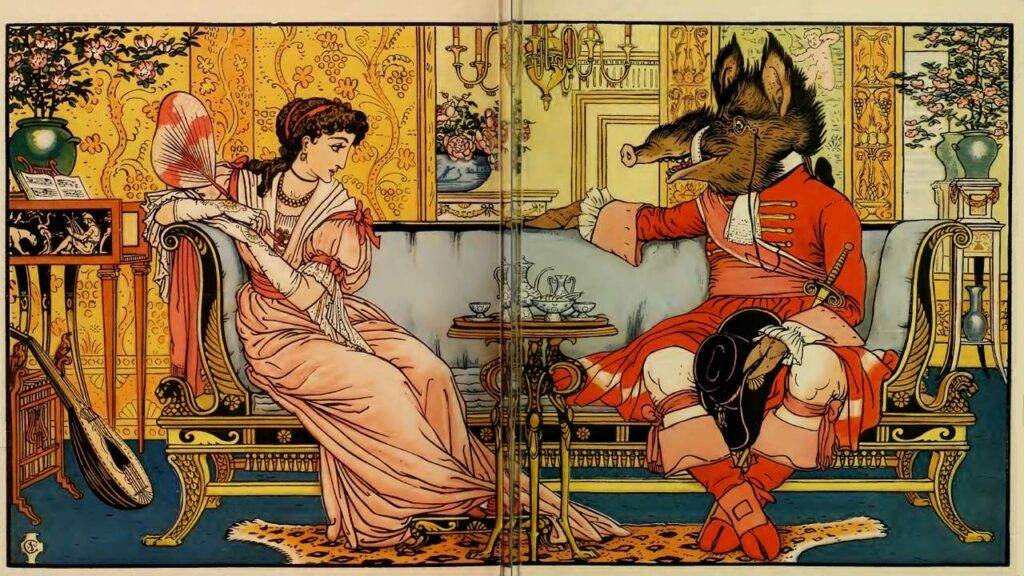
Beauty and the Beast Taking Tea – Walter Crane (1874)

In Villeneuve’s version, the story tells of a widowed merchant who lives with his six children, among them Beauty, the youngest and kindest. After losing their fortune, the family moves to the countryside, where Beauty adapts with humility—unlike her jealous sisters.

One day, the merchant travels to the city hoping to recover one of his ships. On his way back, he is caught in a storm and loses his way, eventually finding shelter in an enchanted castle. There, he picks a rose for Beauty. This act condemns him to death at the hands of the Beast, the master of the castle, who spares his life only if one of his daughters offers to take his place.

Beauty sacrifices herself and moves into the castle, where she discovers that, despite his fearsome appearance, the Beast is kind and caring. Every night, he asks her to marry him, but Beauty refuses, as she dreams of a mysterious prince. When she is allowed to visit her family, her envious sisters delay her return beyond the agreed time. Upon coming back to the castle, Beauty finds the Beast dying, and realizing her love for him, she agrees to marry him.

This act breaks the spell: the Beast transforms into a prince, and the two are married. In time, the Good Fairy reveals that Beauty is, in fact, a lost princess: her biological father was the brother of the Queen—the King of the Fortunate Isles—who believed Beauty had died as a child, and her biological mother was the sister of the Fairy.

Beauty’s Father Returns Home – Walter Crane (1874)

Among the European variants of the tale, we find the tragic version Le Loup Blanc (The White Wolf), collected by Emmanuel Cosquin in Lorraine. The youngest daughter asks for a singing rose, and her father finds it in the castle of the White Wolf. To save his own life, the man promises the Wolf the first living being he meets upon his return, which turns out to be his youngest daughter. At the castle, the girl discovers that the Wolf becomes human at night, but she must not reveal the secret. When her sisters persuade her to speak of it, the castle collapses and the Wolf dies.

“It is only with the heart that one can see rightly; what is essential is invisible to the eye.”
— Antoine de Saint-Exupéry, The Little Prince (1943)

In the version collected by Henri Pourrat in Auvergne, the sisters are named Rose, Marguerite, and Julianne. The Beast is a creature with the features of a mastiff, a lizard, and a salamander. The ending mirrors that of Beaumont’s tale: Rose rushes back to the castle and saves the dying Beast, who transforms into a prince.

The Beast and Beauty’s Father – Walter Crane (1874)

In the Italian oral tradition, the tale is also popular and appears in many versions. In the variant found by Christian Schneller in Trentino, the Beast is a serpent. The heroine attends her sister’s wedding accompanied by the serpent, who transforms into a handsome young man when she kicks his tail during the dance.

The fairy tale of Bellindia, collected by Domenico Comparetti and Antonio De Nino (Abruzzo), presents interesting variations. In some versions, Bellindia asks for a golden carnation instead of a rose. A magical tree, called the “Tree of Weeping and Laughter,” reflects the events in her family: its leaves rise in joy and fall in sorrow.

Princess Rosette – Perrault, Robinson, Madame d’Aulnoy (1921)

In the variant Zelinda and the Monster, collected by Vittorio Imbriani, the story tells of the youngest and most beloved daughter of a merchant who, during a journey, comes across a magnificent garden—the realm of the mysterious King of Oranges. The garden is enchanted, filled with trees laden with golden, fragrant fruit. However, when the merchant picks an orange to bring to his daughter Zelinda, he is confronted by the Monster, a terrifying creature who rules over that place. The Monster grants him his freedom on the condition that the merchant give him one of his daughters.

One day, Zelinda learns that her father is gravely ill. The Monster, though saddened, allows her to return to him with the promise that she will come back within a certain time. Zelinda finds her father, but her stay at home is prolonged, and the Monster, feeling betrayed in his affection, falls into a state of despair. When Zelinda returns to the garden, she finds it in ruins, and the Monster lying on the brink of death. Heartbroken, Zelinda realizes she truly loves him and, declaring her love, kisses him. This act breaks the spell: the Monster transforms into the King of Oranges, a young prince who had been the victim of a curse. With her gesture, Zelinda not only saves the Monster but also her father, who miraculously recovers.

Upon returning home, the merchant recounts the events and, with great courage, Zelinda decides to sacrifice herself to save her father. Once at the Monster’s palace, she discovers that, despite his dreadful appearance, the Monster treats her with respect and offers her a life of luxury. Over time, Zelinda grows fond of him, yet every night he asks her to marry him, and she refuses, unable to overcome her aversion to his appearance.

Zelinda and the Monster – Gherardo Nerucci (Tuscany)

Rachel Harriette Busk, a noted British folklorist, collected in Rome a version of the tale entitled The Enchanted Rose-Tree. This variant stands out for an important detail: the heroine has no sisters. This particularity profoundly changes the dynamic of the story, focusing entirely on the relationship between the young woman and the Beast. The absence of sisters removes the rivalries and jealousies typical of other versions, placing instead at the center the heroine’s personal growth and her bond with the Monster.

The result is a more intimate and direct narrative, where the focus remains on the central theme of the fairy tale: looking beyond appearances to discover a person’s true worth. Even the title, The Enchanted Rose-Tree, evokes the imagery of the magical garden and emphasizes the symbolic importance of nature and hidden beauty.

“Beauty is not in the face; beauty is a light in the heart.”
— Khalil Gibran, Sand and Foam (1926)

From Abruzzo comes a version collected by Antonio De Nino and entitled Bellindia. This variant introduces a unique detail: the heroine does not ask for a rose, as is usually the case, but for a golden carnation. This flower, tied to Italian folk tradition, becomes a symbol of beauty and rarity, strengthening the tale’s bond with its local cultural context.

What truly makes this version special, however, is the introduction of the Tree of Weeping and Laughter, a magical element that connects Bellindia with her family. The leaves of this tree respond to family events: they rise toward the sky when there is joy in her father’s house, and fall sadly when there is sorrow. This poetic touch adds an emotional dimension to the fairy tale and replaces the traditional magic mirror.

Through the tree, Bellindia remains connected to her original world, even while living in the Beast’s dwelling, and the story gains a strong symbolic charge, evoking themes of familial love and longing.

Beauty and the Beast – Warwick Goble (1913)

Analyzing the fairy tale and its variants, one can discern the initiatory and archetypal symbols of the journey toward inner growth and the transformation of the feminine. One of the central aspects of the story is the heroine’s initiatory journey, representing the passage from innocence to awareness, from immaturity to the full expression of her inner strength. The figure of the Beast, seemingly terrifying, embodies the shadow—that unconscious, instinctive part that the protagonist must confront in order to achieve a deeper understanding of herself and the world. In alchemical terms, this process can be seen as a nigredo, the initial phase of symbolic death, necessary to reach the rubedo, the stage of redemption and rebirth.

In The Uses of Enchantment, Bruno Bettelheim analyzes Beauty and the Beast, offering a psycho-pedagogical reading that connects the fairy tale to the process of psychological and emotional maturation. For Bettelheim, this story—like others in the “animal groom” cycle—symbolically represents the passage from infantile narcissism to object love, that is, the capacity to form genuine emotional bonds with another person. In this process, the psychic conflicts that accompany such maturation emerge, including the mixture of repulsion and attraction that characterizes the discovery of sexuality.

According to Bettelheim, Beauty and the Beast addresses, in an allusive way, the overcoming of the fear of intimacy and sexual desire. The initial disgust Beauty feels toward the Beast symbolizes the childish perception of sex as something “beastly” and repugnant. However, the tale teaches that, with the right approach, this perception evolves, revealing the hidden beauty behind the monstrous appearance.

Furthermore, Beauty and the Beast reflects Beauty’s personal growth, as she must leave the safety of her family home to face the challenges of adulthood. Her journey represents the need to overcome fears related to change and the unknown, discovering the beauty and value of authentic connection. The Beast, in turn, embodies the transformation of the most instinctive impulses, demonstrating how love and acceptance can lead to redemption and sublimation.

Beauty and the Beast – Walter Crane (1874)

In The Bear and the Three Sisters, collected in Sardinia by Francesco Mango, the symbol of the bear introduces an archaic and wild aspect, recalling ancient totemic or zoomorphic deities. The bear represents the primordial force of nature, which can be frightening yet contains a protective and transformative dimension. Through her love and acceptance, the heroine is able to transmute this force into something human and harmonious, uniting the wildness of nature with civilization.

“The bear, in many Eurasian and North American traditions, embodies both the feared and revered aspects of nature, standing as a liminal figure between the human and the divine.”
— Miranda J. Green, Animals in Celtic Life and Myth (1992)

In Celtic tradition, the bear is deeply connected to the Moon and its cyclical, transformative symbolism. This animal, often associated with lunar goddesses, represents the primordial force of the feminine—a power manifested through protection, motherhood, and the cycle of life. Its connection to the Moon highlights its relationship with natural rhythms, such as the menstrual cycle, pregnancy, and growth, which mark the passage from youth to maturity.

Statuette from Muri, depicting the goddess Artio – Bern Historical Museum, Switzerland.

The bear is also a symbol of pregnancy and renewal. Its winter hibernation, during which it retreats to its den to rest and, often, to give birth to its cubs, recalls the maternal womb and the concept of rebirth. This aspect makes it a powerful metaphor for inner transformation and psychological maturation: just as the bear withdraws to regenerate, so too does a woman pass through moments of introspection in order to grow and enter a new phase of life.

Motherhood, in bear symbolism, extends to the concept of care and protection for one’s offspring or community. The ferocity with which a she-bear defends her cubs represents the inner strength and determination that emerge in the feminine when it comes to protecting what is precious. This quality reflects the passage from the condition of maiden—more self-focused—to that of a mature woman, capable of responsibility and devotion to others.

In Celtic tradition, the bear is often associated with warrior and protective goddesses, such as Artio, the Celtic goddess of fertility and wild nature, whose name derives from the Proto-Indo-European root artos (bear). Artio embodies the strength and wisdom of the wild feminine, capable of moving in harmony with natural cycles and drawing upon the primordial energies of the Earth.

This symbolism is closely interwoven with feminine rites of passage. The bear becomes the totem guiding a woman through the challenges of growth, symbolizing the ability to confront the shadow, to accept change, and to emerge stronger and more self-aware. In Celtic tradition, therefore, the bear represents a bridge between the physical and spiritual worlds—an archetype of transformation and wisdom linked to the Moon, motherhood, and protection.

The serpent, too—present in the Trentino version collected by Christian Schneller—evokes symbolism connected to feminine initiation.

Terracotta statue of the goddess Angizia – provenance unknown, housed in the National Archaeological Museum of Chieti, Italy.

In Italic tradition, the serpent represents a symbol of wisdom, protection, and regeneration, deeply rooted in the chthonic cult of Mother Earth and in myths tied to fertility and transformation. The figure of the serpent was often associated with female deities such as Angizia—worshipped by the Marsi and other peoples of Central Italy—a goddess of healing and magic.

The serpent symbolized nature’s power of regeneration, the continuous cycle of life, death, and rebirth, and the connection with the deep and mysterious forces of the earth. Unlike the bear, which embodies maternal protection and strength in the passage from girlhood to maturity, the serpent is more directly linked to spiritual transformation and hidden knowledge.

In some Italic folk traditions, the serpent was considered a guardian of treasures and sacred places, indicating its role as custodian of secrets and ancient wisdom. This symbolism also reflects the serpent’s role as a guide in processes of inner and spiritual growth.

Across its many versions—from courtly French retellings to the richly symbolic Italian oral tradition—Beauty and the Beast emerges as far more than a simple love story. It is a layered narrative that interweaves myth, archetype, and cultural memory, carrying echoes of ancient totemic symbols, rites of passage, and spiritual transformation. The Beast, in all his forms—whether a serpent, a bear, a monstrous lord, or a cursed prince—serves as a mirror for the shadow within, the part of the self that must be faced, accepted, and integrated.

The heroines of these tales, by confronting fear and crossing thresholds both literal and symbolic, embody the universal journey from innocence to maturity, from isolation to authentic connection. Their courage does not simply redeem the Beast; it transforms themselves, bridging the divide between the wild and the civilized, the hidden and the revealed, the mortal and the divine.

In this way, Beauty and the Beast and its kindred stories remain profoundly relevant: they remind us that true beauty lies not in appearances, but in the capacity to see, to love, and to be transformed.


Bibliografia

Apuleius. (2016). The Metamorphoses, or The Golden Ass. Milan: Rizzoli.

Barbot de Villeneuve, G.-S. (1740). La Belle et la Bête.

Beaumont, J.-M. Leprince de. (1756). La Belle et la Bête.

Bettelheim, B. (1976). The uses of enchantment: The meaning and importance of fairy tales. New York: Alfred A. Knopf.

Busk, R. H. (1874). The Folk-lore of Rome: Collected by Word of Mouth from the People. London: Longmans, Green & Co.

Comparetti, D., & De Nino, A. (1875). Italian folk tales, novellas, and stories. Florence: G. Barbèra.

Cosquin, E. (1886). Contes populaires de Lorraine. Paris: Maisonneuve et Ch. Leclerc.

Frazer, J. G. (1910). Totemism. London: Adam and Charles Black.

Gibran, K. (1926). Sand and foam. New York: Alfred A. Knopf.

Green, M. J. (1992). Animals in Celtic life and myth. London: Routledge.

mbriani, V. (1877). Florentine folktales. Florence: Le Monnier.

Mango, F. (1982). Popular traditions of Sardinia. Sassari: Gallizzi.

Saint-Exupéry, A. de. (1943). The little prince. New York: Reynal & Hitchcock.

Perfumes and Astrology: The Zodiac Scents of the Natal Chart

The creation of a perfume is not merely a sensory process; it can become a personal and energetic journey when guided by astrology. The natal chart, a true celestial map of the exact moment we were born, not only reveals aspects of our personality or destiny but can also serve as a starting point for selecting essences that resonate with our deepest needs.

Each person is unique, and at the moment of birth, the astral energies present at that time are “imprinted” upon the individual, endowing them with specific astrological characteristics. These elements influence the traits of our personality and our life path, but they can also be associated with particular fragrances and natural essences that reflect this signature, also known as the “signatura.”

Each zodiac sign represents an archetype—a universal model that reflects psychological, behavioral, and energetic traits. These archetypes can be “awakened” or harmonized through the use of specific perfumes and essences. The connection with nature and plants, in particular, dates back to the ancient practice of signatures, in which it was believed that every plant was associated with a planet or a sign, offering healing and symbolic powers aligned with zodiacal energies.

In the vision of the ancient Egyptians, every plant, flower, or tree bears a “sign” that connects it to the cosmos and, in particular, to a specific planet or zodiac sign. This relationship is based on the idea that planets influence the behavior of plants—their form, scent, color, and therapeutic properties. In this context, the natural essences used in perfumes can become powerful tools for harmonizing astrological energies.

Here is an overview of the natural essences associated with the zodiac signs, and how they can influence the creation of a personalized perfume based on zodiacal essences:


Aries (March 21 – April 19)

Element: Fire
Ruling Planet: Mars
Keywords: Energy, initiative, passion

Aries is known for its bold and impulsive nature. It has a strong personality, driven by an energy that constantly pushes it forward. Stimulating essences such as black pepper, bergamot, and ginger are perfect for reflecting its dynamic spirit. These spicy scents are energizing—just like Aries—and help maintain high motivation and focus.


Taurus (April 20 – May 20)

Element: Earth
Ruling Planet: Venus
Keywords: Stability, sensuality, well-being

Taurus is known for its connection to beauty and sensory pleasure, being ruled by Venus, the planet of love and beauty. Woody and floral essences such as cherry blossom, vetiver, and milk thistle harmonize with Taurus’s calm and sensual nature. These scents evoke a sense of stability, security, and sensory delight, helping Taurus feel grounded and fulfilled.


Gemini (May 21 – June 20)

Element: Air
Ruling Planet: Mercury
Keywords: Communication, curiosity, adaptability

Gemini is curious, lively, and always on the move. Governed by Mercury, the planet of communication, they benefit from fragrances that stimulate the mind and promote mental clarity. Essential oils such as lavender, eucalyptus, and mint help balance Gemini’s changeable nature, fostering focus and serenity.


Cancer (June 21 – July 22)

Element: Water
Ruling Planet: Moon
Keywords: Emotion, intuition, protection

Cancer is an emotional sign, deeply connected to home, family, and feelings. Governed by the Moon, Cancers are intuitive and sensitive. Soft, enveloping fragrances such as ylang-ylang, iris, and fig are perfect for them. These essences offer comfort and warmth, fostering a sense of safety and protection.


Leo (July 23 – August 22)

Element: Fire
Ruling Planet: Sun
Keywords: Creativity, leadership, pride

Leo, ruled by the Sun, embodies warmth, creativity, and self-esteem. Fragrances that convey power and royalty are ideal for this sign. Essential oils such as orange, rosemary, and iberico reflect Leo’s sunny nature, promoting self-confidence and creativity.


Virgo (August 23 – September 22)

Element: Earth
Ruling Planet: Mercury
Keywords: Precision, purity, efficiency

Virgo is practical and analytical, with a strong desire for order and purity. Clean, fresh fragrances such as apple, black vanilla, and juniper blend well with Virgo’s methodical and health-conscious nature. These essential oils help stimulate mental clarity and maintain a state of balance.


Libra (September 23 – October 22)

Element: Air
Ruling Planet: Venus
Keywords: Harmony, balance, beauty

Libra constantly seeks balance and harmony in life. Ruled by Venus, this sign appreciates beauty in all its forms. Light, sensual floral essences such as verbena, sage, and sandalwood reflect Libra’s desire to live in an aesthetically pleasing and balanced environment.


Scorpio (October 23 – November 21)

Element: Water
Ruling Planet: Pluto (traditionally Mars)
Keywords: Transformation, intensity, mystery

Scorpio is an intense and mysterious sign, characterized by emotional depth and a strong desire for transformation. Deep, sensual fragrances such as pomegranate, frankincense, and Scots pine reflect Scorpio’s magnetic and passionate nature. These essential oils evoke inner power and regenerative strength.


Sagittarius (November 22 – December 21)

Element: Fire
Ruling Planet: Jupiter
Keywords: Expansion, adventure, optimism

Sagittarius, a lover of adventure and knowledge, is always in search of new experiences. Exotic and stimulating fragrances such as borage, basil, and Atlas cedar are perfect for this sign. These essences promote open-mindedness and inspiration, accompanying Sagittarius on both inner and outer journeys.


Capricorn (December 22 – January 19)

Element: Earth
Ruling Planet: Saturn
Keywords: Discipline, ambition, stability

Capricorn is known for its seriousness and dedication to work. Earthy, grounding fragrances such as broom, frankincense, and Scots pine are ideal for supporting its ambition and discipline. These essences instill stability and enhance focus, helping Capricorn stay on course toward its goals.


Aquarius (January 20 – February 18)

Element: Air
Ruling Planet: Uranus
Keywords: Innovation, originality, independence

Aquarius is an innovative and nonconformist sign, always looking toward the future. Fresh, unique fragrances such as fennel, eucalyptus, and patchouli are ideal for stimulating Aquarius’s creative and visionary mind. These essences promote mental clarity and inspiration.


Pisces (February 19 – March 20)

Element: Water
Ruling Planet: Neptune
Keywords: Compassion, imagination, spirituality

Pisces are known for their sensitivity and intuition. Ethereal, calming fragrances such as water lily, lotus flower, and storax are ideal for Pisces, as they encourage meditation and connection with their inner world. These essential oils evoke deep serenity and inner peace.


Creating a personalized perfume based on the natal chart is not merely about selecting pleasant essences—it is about establishing a deep connection with the energies of one’s birth chart, balancing and harmonizing planetary influences through the power of plants and essential oils.

In a soul perfume or zodiac essence, top, heart, and base notes can be combined while balancing the influences of the seven planets and the twelve zodiac signs, as well as the most significant aspects of the natal chart. In doing so, the perfume becomes not just a beauty accessory but a personal energetic talisman, capable of reflecting the unique essence of the wearer.

A perfume created according to archetypes and signatures is not just a blend of fragrances—it is an energetic work of art. Each essence reflects a part of the person’s psyche and life path, resonating with their strengths, weaknesses, and potential. This holistic approach creates a deep and unique sensory experience, connecting the person with their truest self and with the universe itself. When a perfume resonates with the soul, it can become a powerful tool to express and strengthen one’s identity while accompanying them on their life journey. This process transforms a perfume into a true energetic talisman, capable of resonating with the soul and amplifying personal energy.


Request your personalized consultation now and begin your olfactory journey toward inner connection.


    Reincarnation, Ancestrality, and Initiations: The Vision of the Soul in Ancient Rome

    by Hasan Andrea Abou Saida

    Reincarnation is an ancient belief found in numerous spiritual and religious traditions, from the Vedic philosophies of India to the religion of Egypt, and even to Pythagorean thought in Greece. According to this idea, the soul, after the death of the physical body, is reincarnated into a new body—whether human or animal—thus continuing a cycle of successive lives. This process repeats until the soul attains a state of purity or enlightenment, which brings the cycle of rebirths to an end.

    The Return of Cicero from Exile (Francesco Giudici il Francabigio and Alessandro Allori, 1520)

    In ancient Rome, the official religion was polytheistic, centered on the worship of gods and ancestors. While traditional Roman religion did not explicitly include a doctrine of reincarnation, the idea was not entirely foreign to the Romans, largely due to the influence of foreign philosophies and religions. The impact of Greek culture on Rome was profound, and the concept of reincarnation reached Roman thought through Greek philosophy. Cicero, one of Rome’s most renowned orators and philosophers, discussed the transmigration of the soul in several of his works, though he was not an ardent supporter of the doctrine.

    “Men come into the world with a store of thoughts and knowledge that they have not acquired in this life, but have brought with them from their previous life. It is as if their souls carry traces of past experiences.”
    — Cicero, On Old Age (De Senectute)

    In the same treatise, Cicero explores the idea that the soul must undergo transmigration to atone for previous faults and purify itself from past sins.

    “The ancient seers and interpreters of the secrets of the heavens, such as oracles and prophets, spoke of a destiny of the soul that transmigrates and reincarnates, based on a tradition they believed had a foundation in truth. They held that souls, after death, pass from one body to another, accumulating experiences and knowledge.”
    — Cicero, On Old Age (De Senectute)

    “Men are born to suffer and to pay for certain sins committed; for this reason they are subjected to many tribulations and sorrows.”
    — Cicero, On Old Age (De Senectute)

    Pythagoras

    Pythagoreanism, founded by Pythagoras, taught that the soul was immortal and reincarnated into various bodies until it achieved a state of purification. This belief was linked to the doctrine of anamnesis, according to which learning was a process of recalling knowledge acquired in previous lives.

    “Those who had adopted the views of Pythagoras and Plato recognized two deaths: that of the body and that of the soul. The first occurred when the soul left the body; but the soul died when it went to be distributed among the limbs of the body it was to animate. To depart from the sublime source was, for the soul, to lose life; to return to it was to be reborn. With the first death, the soul freed itself from captivity to enjoy the true treasures of nature and the freedom that is its own; with the other, on the contrary, which we call life, the soul is deprived of the light of its immortality and plunged into the darkness of a kind of death.”
    — Macrobius, Commentary on the Dream of Scipio (Commentarii in Somnium Scipionis)

    Virgil Enthroned Between Two Muses (Early 3rd Century CE – Tunis, National Bardo Museum)

    Roman poets such as Virgil and Ovid embraced the idea of the soul’s reincarnation.
    In Book VI of Virgil’s Aeneid, Aeneas descends into the Underworld and meets the shade of his father Anchises, who explains the birth and purification of souls, and their preparation for a new incarnation after drinking from the waters of Lethe, the river of forgetfulness:

    “Souls to whom fate gives other bodies, to whom it is forbidden to pass the Lethe before forgetting their former sufferings, and before coming to the dark dwellings.”
    — Aeneid, VI

    Anchises then adds:

    “Thus, whoever you see here now bearing a face, returns above to the light, and lives another life; but first Lethe must wash away all memory of the past.”
    — Aeneid, VI

    The Poet Ovid

    Ovid, in his poem Metamorphoses, explores in detail the concept of the transmigration of souls.
    The theme of metempsychosis is explicitly addressed in Book XV, where Pythagoras, the renowned Greek philosopher, presents his ideas on change and the continuity of the soul, asserting that souls never die but move from one body to another, and that death is simply a change of form.

    “Nothing in the universe perishes; believe me, but everything changes, and death, which is called the destruction of life, is nothing but a change of dwelling.”
    — Metamorphoses, XV

    In this context, Ovid attributes to Pythagoras the idea that all things are in a state of continuous flux, and that souls migrate from one body to another, directly reflecting the doctrine of metempsychosis. Pythagoras urges respect for all living creatures, since the soul that once inhabited a human body might now reside in an animal.

    Alongside Pythagoreanism, Orphism—a Greek school of thought—shared a similar view of the transmigration of the soul. The Bacchic Mysteries, a Roman form of the Orphic mysteries, held the belief that the soul, having fallen into the material world, had to pass through several reincarnations before returning to the divine. This idea, centered on the purification of the soul, resonated with some Romans, especially within the rites of the Bacchic Mysteries, celebrated in honor of Bacchus (Dionysus in Greece), the god of wine and ecstasy.

    Apuleius, a Roman writer and philosopher of Berber origin, was a fervent supporter of mystery rites and esoteric teachings concerning the transmigration of the soul. A follower of Platonism, Apuleius delves into the concept of reincarnation in his De Deo Socratis, exploring the “genius” or “daimon” as an intermediary between the divine and the human. In this work, the soul is portrayed as an entity aspiring to return to its divine origin, yet hindered by earthly contaminations.

    The Boy and the Donkey (5th century – Istanbul)

    In his novel The Metamorphoses (also known as The Golden Ass), Apuleius deeply explores the theme of transformation, using it as a powerful metaphor for the transmigration of the soul. The protagonist, Lucius, is transformed into a donkey due to a mistake during a spell, and through a series of adventures filled with suffering and learning, he desperately seeks to return to his human form. This journey culminates in the intervention of the goddess Isis, who enables him to regain his human appearance—an event that can be interpreted as a true spiritual rebirth.

    “For we are born twice: once at the beginning, when we come forth from the womb and see the day, and again when, in the wisdom of the mysteries, we receive the truth that leads us to the light of eternal life. This second birth does not occur by itself, but through a divine intervention which, by mystery, lifts us from the mire and makes us partakers of the divinity itself.”
    — Apuleius, The Metamorphoses, Book XI

    This description of the “second birth” highlights a theme dear to ancient philosophical and religious tradition: the journey of the soul which, through trials and purifications, ascends to return to its divine nature. The expansion of the Roman Empire brought the Romans into contact with many different cultures, including those of Egypt and the East, where beliefs such as reincarnation were deeply rooted. The Egyptians, for instance, had a complex conception of life after death, which included the idea that the soul could return to life in various forms. Although the Egyptian emphasis was more on resurrection than on reincarnation in the strict sense, the Egyptian concept of the transmigration of the soul certainly influenced the Romans—especially through the cult of Isis, which became extremely popular in Rome.

    Eastern influence also manifested itself through Mithraism, a mystery religion of Persian origin that spread widely among Roman soldiers. Although Mithraism did not explicitly promote reincarnation, its cyclical view of time and existence could easily have prepared the ground for a greater acceptance of such ideas among its followers.

    The Lararium (House of the Menander – Pompeii)

    In Roman religion, ancestor worship was central. The spirits of the dead, the Manes, were believed to influence the living and were honored with rites, libations, and festivals such as the Parentalia (February 18–21). During these days, it was thought the dead could walk among the living, showing that the worlds of the living and the dead were closely intertwined.

    If neglected, a soul might become restless or malevolent—an idea that parallels reincarnation in its belief in the soul’s continued journey. Most souls descended to Pluto’s underworld, but those still bound by earthly ties could be sent back to the world of the living, much like the purgatorial process described by Dante.

    Domestic religion focused on the Lares, guardian spirits of the household and deified ancestors. As Apuleius notes, the soul itself is a daemon: men become Lares if virtuous, ghosts if wicked, and Manes if their nature remains uncertain.

    In conclusion, the Roman vision of the soul was a complex interplay of ancestral reverence, philosophical influences, and mystery cults. While the official religion did not explicitly embrace reincarnation, ideas from Pythagoreanism, Orphism, and Eastern traditions permeated Roman thought, blending with deeply rooted beliefs in the continued presence and influence of the dead. Through the veneration of the Manes, Lares, and protective spirits, the Romans maintained a living connection with their ancestors, seeing the soul as an eternal force—capable of transformation, purification, and eventual return to the divine. This worldview reflects a civilization that, while pragmatic in politics and daily life, embraced profound metaphysical concepts about the continuity of existence beyond death.


     Bibliography

    Apuleius. (2021). Metamorphoses, or The golden ass (S. J. Harrison, Trans.). Oxford University Press.

    Apuleius. (2017). Apology (C. P. Jones, Trans.). Cambridge, MA: Harvard University Press.

    Bertholet, E. (1994). Reincarnation in the ancient world (Translated edition). Rome: Edizioni Mediterranee.

    Burkert, W. (1987). The early Greek concept of the soul. Princeton University Press.

    Cicero, M. T. (1991). On old age (W. A. Falconer, Trans.). Cambridge, MA: Harvard University Press.

    Cicero, M. T. (1990). On the nature of the gods and On divination (H. Rackham, Trans.). Cambridge, MA: Harvard University Press.

    Dodds, E. R. (1951). The Greeks and the irrational. University of California Press.

    Dolansky, F. (2011). Honouring the family dead on the Parentalia: Ceremony, spectacle, and memory. Phoenix, 65(1/2), 125–157.

    Macrobius, A. A. T. (2018). Commentary on the Dream of Scipio (W. H. Stahl, Trans.). New York: Columbia University Press.

    Ovid. (2004). Metamorphoses (A. D. Melville, Trans.). Oxford University Press.

    Santangelo, F. (2022). The religion of the Romans. Rome: Laterza.

    Virgil. (2017). The Aeneid (S. Ruden, Trans.). Yale University Press.

    Bes: The Egyptian God, Protector of the Hearth and Joy

    by Hasan Andrea Abou Saida

    In the ancient Egyptian pantheon, characterized by majestic and imposing deities, there emerges a decidedly atypical figure: Bes. Unlike other gods such as Osiris, Isis, or Ra, Bes appears as a dwarf with a bearded face and a rather grotesque appearance. Nevertheless, his importance cannot be underestimated. He was, in fact, a protector—a benevolent and joyful god—associated with the home, children, mothers, childbirth, and music.

    According to scholar Donald Mackenzie in 1907, Bes may have been introduced into Egypt during the Middle Kingdom, originating from Nubia or Somalia. His cult, according to this theory, would not have spread widely until the beginning of the New Kingdom. However, more recent discoveries have challenged this hypothesis. Several figurines similar to Bes have been found in deposits dating back to the Naqada period of pre-dynastic Egypt, such as the thirteen figurines discovered at Tell el-Farkha. These findings suggest that Bes may have been worshipped in much earlier times than previously thought.

    The grotesque figure of Bes became particularly prominent during the 18th Dynasty, although it is possible that he was introduced as early as the 12th Dynasty. Despite the fact that the cult of Bes spread as far as Syria, his origin is believed to be African, perhaps linked to the region of Somalia.

    Amulet of the god Bes (1070–712 B.C.)

    The word “Bes” may derive from the Nubian term for “cat,” thus suggesting a possible Nubian or southern origin for the god Bes. However, the etymology of the name Bes is complex and may have other roots. For example, it has been suggested that the name could derive from one of two hieroglyphs: bs, meaning “flame,” possibly in relation to the sun god Ra, or bz, meaning “to be initiated” or “to introduce,” a possible reference to the masks used in the god’s cult.

    Initially, Bes may have been depicted as a cat standing on its hind legs, which would reinforce the idea of an origin linked to felines, before taking on a more anthropomorphic appearance. Later, Bes was portrayed as a human figure affected by dwarfism, often wearing a leopard skin around his neck—a detail that may highlight his connection to protection and ferocity. His body is often shown covered in hair, and at times he is depicted with the tail of a lion. This physical description may be related to his role in frightening away evil spirits. Although his appearance might seem unsettling, Bes was regarded as a benevolent daimon.

    Sculpture of the god Bes at Dendera

    Furthermore, his depiction is unusual for another reason: most Egyptian deities are portrayed in profile, whereas Bes is almost always depicted frontally. This detail makes him immediately recognizable and enhances his protective nature, as if he were always ready to confront evil forces head-on.

    “Bes was a household protector whose image was thought to guard against evil spirits, particularly during childbirth and early childhood. His presence in the home was believed to ensure safety, health, and happiness for the family.”
    — Wilkinson, R. H. (2003). The Complete Gods and Goddesses of Ancient Egypt. Thames & Hudson.

    Bes was a versatile god, associated with various aspects of daily life. His primary role was to protect the home and its inhabitants, particularly women and children. In an era when infant mortality was high and pregnancy could be dangerous, the protection of Bes was considered vital. During childbirth, Bes was often depicted alongside Taweret, the hippopotamus goddess, who was also associated with motherhood and the protection of pregnant women. While Taweret embodied strength and physical protection, Bes was responsible for warding off evil spirits that could interfere with the birthing process. The combination of these two deities ensured complete protection, both physical and spiritual, making childbirth in Egyptian culture safer in a time when infant and maternal mortality rates were high. Although his primary role was to safeguard life and ensure daily well-being, Bes was sometimes incorporated into funerary rituals to provide additional protection to the deceased during their journey to the afterlife and the rebirth of the soul.

    Left: Stele of Horus standing on two crocodiles. Right: Bottle in the shape of Bes’s head (Ashmolean Museum)

    Bes was not only a protective deity but was also closely associated with music, dance, and the pleasures of life—all essential elements in religious rituals and celebrations. Often depicted with musical instruments such as drums and harps, Bes embodied the spirit of joy and lightheartedness, helping to create an atmosphere of cheerfulness during festivities.

    His role was not limited to protecting against evil spirits but also extended to promoting a positive and joyful environment capable of dispelling negative energies. This connection with music and dance has led many scholars to regard Bes as a god of happiness and merriment, able to bring moments of lightheartedness into a society deeply rooted in ritual and spirituality.

    During the Middle Kingdom, the image of Bes began to appear on a variety of everyday objects, including masks, amulets, feeding bottles, and magical knives—symbols of his protection and benevolent influence. With the advent of the New Kingdom, the iconography of Bes spread even further, becoming a common presence even in tattoos, which were often applied to the thighs of dancers, musicians, and servants. These tattoos not only represented the god’s protection but also celebrated his connection to the arts and pleasure, making Bes a central figure in the festive and artistic life of ancient Egypt.

    Mask of Bes (4th–1st century BCE)

    In addition to these functions, Bes also had an apotropaic role—that is, the ability to ward off evil. His images were often placed at the entrances of houses or in bedrooms, with the purpose of frightening away and repelling evil spirits. In this sense, Bes can be compared to other protective figures found in various cultures, such as the gargoyles of European Gothic architecture. Another example of the popularity of Bes’s cult in Ancient Egypt is represented by the so-called “magic wands.” These instruments, often decorated with the image of Bes and other protective deities, were used in domestic rituals to ensure the protection of the household. Magic wands were employed especially during pregnancy and childbirth, but also during other critical moments of family life.

    “The grotesque figure, far from being merely decorative, serves as a vigilant guardian, forever confronting the forces that threaten the household.”
    — Wilkinson, R. H. (2003). The Complete Gods and Goddesses of Ancient Egypt. Thames & Hudson.

    Despite Bes’s importance in the daily life of the Egyptians, there are not many temples dedicated to him. This is because Bes was primarily a domestic god, worshipped within the home rather than in large sanctuaries. His images were commonly found on amulets, everyday objects such as mirrors and combs, and on furniture.

    Mirror support in the shape of Bes (7th–6th century BCE)

    However, in the Dakhla Oasis, in Egypt’s Western Desert, a temple dedicated to Bes has been discovered. This unique sanctuary testifies to the importance that Bes could hold even beyond the domestic sphere, especially in remote or frontier contexts where divine protection was particularly valued.

    The cult of Bes was not limited to Egypt. During the Ptolemaic period, when Egyptian culture merged with Greek culture, Bes also became popular in the Eastern Mediterranean, especially in Cyprus and Phoenicia. In these regions, Bes was associated with other local deities, and his cult evolved, integrating elements from other religious traditions.

    The influence of Bes also extended to art and literature. Although he was not a deity tied to the great Egyptian myths, Bes appears in numerous magical texts and spell formulas.

    Clay figurine of Bes as a soldier (4th century BCE)

    The iconography and worship of Bes left a lasting mark not only in ancient Egypt but also in other cultures. During the Roman era, Bes became a popular figure throughout the Empire, especially among soldiers, who regarded him as a protector on the battlefield. His images are found on mosaics, coins, and other Roman artifacts, attesting to his enduring significance.

    Even after the end of ancient Egypt, the image of Bes continued to exert influence, especially in art and popular culture. His grotesque yet benevolent figure was reinterpreted in various contexts, sometimes losing its original meaning, but retaining its character as a protector and bringer of joy.


    Bibliography

    Baines, J., & Malek, J. (2000). Atlas of ancient Egypt. Oxford University Press.

    Brewer, D. J., & Teeter, E. (1999). Egypt and the Egyptians. Cambridge University Press.

    Elliott, K. (2011). The little book of Egyptian gods and goddesses. Thames & Hudson.

    Frankfurter, D. (2006). Religion in Roman Egypt: Assimilation and resistance. Princeton University Press.

    Hart, G. (2005). The gods of ancient Egypt. The American University in Cairo Press.

    Kemet, N. (2004). The magic of ancient Egypt: A guide to the divine and the sacred. Phaidon Press.

    Redford, D. B. (2002). Egypt, Canaan, and Israel in ancient times. Princeton University Press.

    Robins, G. (1997). The art of ancient Egypt. Harvard University Press.

    Shaw, I. (2000). The Oxford history of ancient Egypt. Oxford University Press.

    Wilkinson, R. H. (2000). The complete temples of ancient Egypt. Thames & Hudson.

    Nefertum: The God of the Lotus, Rebirth, and Perfumes

    by Hasan Andrea Abou Saida

    Nefertum, though less well-known than deities such as Ra or Osiris, holds a significant place in the Egyptian pantheon. Associated with rebirth and beauty, Nefertum is revered as the god of the lotus, a symbol of purity and regeneration. His name, derived from the ancient Egyptian “nfr-tm,” meaning “He Who Is Perfect,” reflects his connection to beauty and divine perfection, embodying the vitality of nature and the freshness of life. Nefertum is closely linked to perfumes and essences, symbols of his role in regeneration.

    The lotus, a central element in Egyptian religion, represents the cycle of life and death. This flower, which opens in the morning and closes at sunset, was considered a symbol of daily rebirth, closely connected to the sun god Ra. According to legend, Nefertum eased Ra’s suffering by bringing him a sacred lotus to comfort him. As the god of the lotus, Nefertum was also venerated as a deity of creation and rebirth. Some depictions show him emerging from the lotus, symbolizing the birth of the sun each morning. In some versions of the creation myth, Nefertum rises from the primordial chaos in the form of a lotus flower, bringing with him the sun and initiating life.

    Nefertum (Serapeum di Saqqara, 664-332 a.C.)

    In the Pyramid Texts, Nefertum is called “Lotus Flower at the nose of Ra,” while in the Book of the Dead, known as the “Papyrus of Ani,” he appears among the 42 judges of the tribunal of the afterlife:

    “Rise like Nefertum from the blue water-lily at the nostrils of Ra, and you shall come forth upon the horizon every day.”

    The celestial lotus referred to is the flower from which the sun is born, represented by Harpocrates, or the child Horus. The idea of resurrection was closely linked to the lotus, and Ani, aspiring to transform into a lotus, wishes to be reborn into a new body and ascend to the sky like the Sun god. One of the epithets of Nefertum was “Young Ra,” representing the rising sun.

    Amuleto del dio Nefertum (664–332 a.C.)

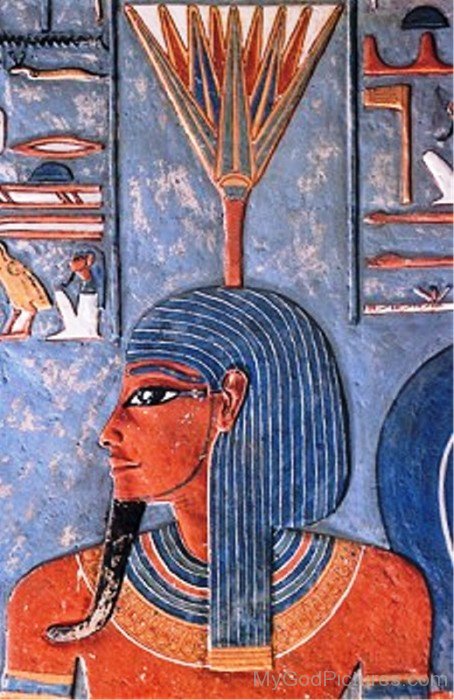
    Nefertum is often depicted as a young man wearing a lotus-shaped headdress, sometimes adorned with feathers or serpents, emphasizing his connection to vegetation and vitality. In other representations, he appears as a man with the head of a lion, in association with the lion-headed goddesses. Nefertum is also part of the divine triad of Memphis, together with Ptah and Sekhmet, and is considered their son. In this context, Nefertum acts as a mediator, uniting Ptah’s creative power with Sekhmet’s destructive force, thus embodying the ability to create and destroy, heal and protect. In other traditions, Nefertum is considered the son of the goddess Bastet. Temples dedicated to him were located in Thebes and in the Nile Delta, where he was venerated as a symbol of rebirth and beauty. In Buto, however, Nefertum was seen as the son of the serpent goddess Wadjet.

    “Nefertem, the youthful god of the lotus blossom, was associated with the rising sun and with the perfumes and healing properties of the lotus flower. Often regarded as the son of Ptah and Sekhmet (or Bastet), he could also appear with a lion’s head, reflecting his leonine connections. As a symbol of rebirth and beauty, he was invoked in daily life for health and well-being and in funerary contexts for the regeneration of the deceased.”
    — Wilkinson, R. H. (2003). The Complete Gods and Goddesses of Ancient Egypt. Thames & Hudson.

    Like many other Egyptian deities, Nefertum was also subject to syncretism. During the New Kingdom, he was associated with deities such as Ra and Atum, becoming part of an increasingly complex syncretic pantheon. However, the cult of Nefertum was not confined solely to great temples or official ceremonies. In daily life, Egyptians also venerated Nefertum as a protector of health and beauty. Lotus-shaped amulets linked to Nefertum were worn for protection and as symbols of rebirth. In funerary rituals, the god was invoked to protect the soul of the deceased, symbolizing the soul’s regeneration and accompanying it on its journey to the Duat, the Egyptian afterlife.

    From the first rays of the sun emerging from the primordial lotus to the delicate fragrances that perfumed temples and homes, Nefertum embodied the essence of renewal, beauty, and vitality in ancient Egypt. As both the youthful sun and the fragrant blossom, he united creation and healing, light and protection, in a single divine figure. His presence in myth, art, and daily life reveals a deity who was not only part of the grand cosmic order but also a personal guardian of health and spiritual rebirth. Even today, the image of Nefertum rising from the lotus remains a powerful symbol of life’s constant capacity to renew itself, echoing the eternal cycle of dawn over the Nile.


    Bibliography

    Budge, E. A. W. (1913). The papyrus of Ani: A reproduction in facsimile, Volume 1: Book of the dead. Putnam.

    Hornung, E. (1982). Conceptions of God in Ancient Egypt: The One and the Many (J. Baines, Trans.). Cornell University Press. (Original work published 1971)

    Mestica, G. S. (2003). Universal dictionary of mythology [Dizionario universale di Mitologia]. Bompiani.

    Tosi, M. (2004). Encyclopedic dictionary of the deities of ancient Egypt [Dizionario enciclopedico delle divinità dell’antico Egitto]. Ananke.

    Wilkinson, R. H. (2003). The complete Gods and Goddesses of Ancient Egypt. Thames and Hudson.

    Mephitis: Italic Guardian of the Passages Between Life and the Otherworld

    by Hasan Andrea Abou Saida

    Mephitis (also spelled Mefitis, Mephite, or Mefite) is an Italic goddess originating from the Oscan-Sabellic area, whose cult extended from Samnium to Rome and Cremona, reaching as far as Bagno di Romagna. Archaeological evidence indicates that the worship of Mephitis dates back at least to the 6th–7th century BCE, with some hypotheses placing it as early as the 9th century BCE.

    Mephitis is a complex Italic deity. Her places of worship indicate a connection with waters of various kinds and suggest possible associations with the cults of Artemis/Diana and Isis. The name Mefitis may derive from the Proto-Indo-European roots medhio-dhuíhtis, referring to that which exhales, or from medh(u)- and medhu-, meaning “intoxicating” or “she who stands in the middle.” Other hypotheses link the name to the Umbrian word mefa, referring to a sacred honey cake, suggesting a connection with sweetness and nourishment.

    The goddess Mephitis of Cantoni

    Mephitis is a liminal goddess, a guardian associated with life’s transitions and with the subterranean and aquatic worlds, as well as with the cycles of life and death. She is a water deity, invoked for the fertility of the fields and female fecundity, and was regarded as a symbol of purity and abundance. As a presiding force over transitions, her domain extended to many other passages, such as day and night, heat and cold, birth and death, as well as the seasonal movement of livestock, in which she acted as the protector of herds.

    With the Roman expansion, however, Mephitis was identified with other Roman goddesses, such as Venus and Juno, and took on negative characteristics. In fact, late Roman sources describe her as a dangerous deity, associated with geophysical phenomena and sulfurous vapors. Mephitis was likely originally a goddess of underground springs, such as natural water sources; the fact that many of these springs were sulfurous led the Romans to associate her with the danger of noxious gases. The term “mephitic” still today refers to something foul or unhealthy. However, it is possible that this negative meaning arose from the Romanization of Italic myths, and the cult of Mephitis retained a strongly local character. Her veneration was not uniform throughout Italy and took on specific traits depending on the region. In northern Italy, for example, Mefite was linked to stagnant waters and harmful vapors from the ground, while in central and southern Italy she was associated with sulfurous waters and the poisonous gases that issued from them.

    Votive statue from the sanctuary dedicated to the goddess Mephitis

    With the advent of Christianity, many pagan cults, including that of Mephitis, gradually disappeared, and nothing more was heard of the goddess of the waters. However, some aspects of her worship survived in Christian popular culture, especially in rural areas where the bond with nature remained strong.

    In Cremona, the cult of the goddess Mephitis was particularly significant, with her temple located just outside the city walls, in a marshy and hazardous area. This place was shrouded in an aura of sacredness and fear, for Mephitis, worshipped here as the lady of noxious fumes and poisonous exhalations, was feared for her power to dispense disease and sudden death through the mephitic vapors rising from the ground. The temple, which miraculously survived the destruction of Cremona in 69 CE by the troops of Vespasian, was regarded as a symbol of the goddess’s divine power, capable of protecting her sanctuary even amid devastation.

    Cremona Cathedral, dedicated to Saint Mary of the Assumption, built between 1107 and 1190

    The survival of the temple, interpreted by contemporaries as a miracle, reinforced both the fear and veneration toward Mephitis, who was regarded as a deity capable of controlling subterranean forces and adverse natural events. The site was visited by worshippers who, aware of the area’s dangers, nevertheless came to pay homage to the goddess in the hope of gaining her protection and favor. Votive offerings, such as figurines of animals and ritual objects, were deposited at the temple as acts of devotion, in the hope that the goddess Mephitis would grant fertility and health, and ward off the very evils she herself could unleash. It is believed that the figure of Mephitis was preserved in tradition under the guise of Saint Mary of the Assumption, and that her ancient temple lies beneath the present-day Cremona Cathedral, dedicated to Saint Mary of the Assumption.

    “The sacred never completely disappears; it is preserved under new forms or assimilated into new structures, but it continues to fulfill the same function of giving meaning to life and the world.”
    — Mircea Eliade, The Sacred and the Profane (1957)

    In the Valley of Ansanto, a sacred and feared place, pilgrims came even from other regions. Here, the goddess Mephitis was worshipped as the lady of the underworld and of subterranean waters. She was believed to grant fertility and protection from disease, but also to cause sudden death through her vapors. Historical sources report that animals and even people could die if exposed too long to the poisonous gases from the springs.

    In Lazio, there were also sacred sites dedicated to Mephitis, such as Lake Cutilia—considered the navel of Italy—and a sacred grove mentioned by Pliny the Elder in the territory of the Volsci. Here, the cult of Mephitis, closely linked to subterranean forces and the dangerous aspects of nature, was gradually replaced by the cult of Saint Felicitas. Saint Felicitas is venerated in the Valley of Ansanto as the protector of the community, and her cult inherited many aspects of the ancient worship of Mefite, such as the ability to heal and protect from harm, as well as to spiritually purify the faithful.

    Geosite of Mephitis in the Valley of Ansanto, natural sulfurous spring associated with the ancient sanctuary of the goddess Mephitis, Rocca San Felice (Avellino, Campania)

    In the final verses of Canto XXXIII of the Purgatorio, Dante, accompanied by Matelda, drinks from the waters of the river Lethe—a symbolic act that allows him to forget his sins, thus preparing for his ascent to Paradise. This theme of purification through water recalls the sacred rites dedicated to the goddess Mephitis.

    As with Dante, the devotees of the goddess purified themselves in the waters to earn access to the divine abode. Sanctuaries dedicated to Mephitis are often located near springs and waterways, highlighting the importance of the aquatic element in the rituals devoted to her. In the cult of Mefite, water not only serves a purifying function but also emphasizes fertility and abundance, both essential to the life of ancient communities. Through rites that included ablutions and immersions, the faithful prepared themselves for spiritual and physical regeneration, akin to that described by Dante.

    The Canneto Valley in Settefrati was a sacred place of worship, set in a lush mountainous landscape where wild nature merged with spirituality. Here, the goddess Mephitis was venerated as the guardian of the spring waters that flowed abundantly from the earth. These waters were considered miraculous, capable of curing illnesses and purifying the souls of the faithful who immersed themselves in them. The valley was an important pilgrimage destination, frequented not only by local inhabitants but also by worshippers from other regions. Pilgrims came to this place to pay homage to the goddess, pray for the fertility of the fields, and seek protection against illnesses and the ills of body and spirit.

    In this region, the replacement of Mephitis cult took place through the devotion to Our Lady of Canneto, venerated for her association with the spring waters and the healing properties attributed to them. Our Lady of Canneto is seen as a maternal and protective figure, ensuring fertility, health, and spiritual purification—clear parallels to the functions that Mephitis once fulfilled for her faithful.

    Canneto Valley of Settefrati, site of a spring sanctuary historically linked to the worship of the goddess Mephitis, later associated with the Marian devotion to Our Lady of Canneto (Frosinone, Lazio).

    San Pietro di Cantoni in Sepino was another center of worship dedicated to Mephitis, located in a mountainous area of Samnium characterized by a rugged and solemn landscape. This place was particularly venerated for the presence of sulfurous waters, considered sacred and endowed with healing powers. The goddess Mephitis was honored as the protector of subterranean waters and the hidden forces of the earth, and the sanctuary attracted pilgrims seeking miraculous cures or wishing to purify themselves from sins and impurities. The rites practiced here were often accompanied by votive offerings and sacrifices—acts of devotion through which the faithful hoped to gain the goddess’s favor.

    “Water symbolizes the whole of potentiality; it is the fons et origo, the source of all possible existence.”
    — Mircea Eliade, Patterns in Comparative Religion (1958)

    The cult of Mephitis in this location, tied to sulfurous waters and healing, may have been replaced by devotion to a local Marian figure or to a saint such as Saint Peter, whose name is associated with the site. Saint Peter, being one of the most venerated apostles, is often invoked for protection and spiritual purification, reflecting the same aspirations of the faithful who once turned to Mephitis.

    San Pietro di Cantoni in Sepino, archaeological site and sanctuary historically dedicated to the goddess Mephitis, located in the mountainous region of Samnium (Molise).

    Rossano di Vaglio, located in a mountainous region of Lucania, was an important center of worship for the goddess Mephitis, venerated here as a chthonic deity linked to the depths of the earth and the mysteries of the underworld. The sanctuary of Rossano di Vaglio was surrounded by an evocative natural setting steeped in mystery, with thermal springs and vapors rising from the rocks, evoking the presence of the goddess. Worshippers came to this place to perform purification rites and to ask for the goddess’s protection against disease and the dangers that threatened the community.

    The cult of Mephitis in this region was particularly strong, and the sanctuary served as a spiritual point of reference for the entire local population, symbolizing the deep bond between humanity and the forces of nature. Here, the transformation of the cult may have led to devotion to a local saint or to a Madonna, such as Our Lady of the Sacred Mount of Vaglio. This figure serves as a spiritual reference point for the community, associated with protection from harm and healing—central elements in the original worship of Mephitis.

    Sanctuary of the goddess Mephitis at Rossano di Vaglio, archaeological site in the mountains of Lucania, associated with chthonic worship and purification rites linked to thermal springs.

    In Apulia, the cult of Mephitis was widespread among the Dauni, an ancient people of the province of Foggia, where Mephitis was venerated as a goddess of waters and fertility, as well as the protector of the souls of the dead. One of the most important testimonies is the sanctuary near Lake Varano, where her worship was assimilated into Christianity through devotion to Our Lady of Grace, a Marian figure who holds an important role in the region.

    Lake Varano, coastal lake in the province of Foggia (Apulia), site of a sanctuary where the cult of the goddess Mephitis was later assimilated into the Christian devotion to Our Lady of Grace.

    In tracing the scattered sanctuaries and varied traditions dedicated to Mephitis across the Italian peninsula, a complex and multifaceted portrait of the goddess emerges—one that blends chthonic power, the life-giving force of water, and the peril of nature’s untamed energies. From Lucania to Apulia, from the marshes of Cremona to the sulfurous springs of Samnium, Mephitis was both a source of fertility and purification, and a formidable guardian of thresholds between worlds.

    The gradual assimilation of her cult into Christian devotion—often through Marian figures or protective saints—did not erase her symbolic presence. Instead, it preserved key aspects of her role: the healing power of sacred waters, protection from harm, and mediation between life and death. In this way, Mephitis continues to live on, not as a forgotten deity of antiquity, but as an enduring archetype embedded in the cultural and spiritual fabric of Italy, linking ancient rites to modern faith.


    Bibliography

    Alighieri, D. (2009). The Divine Comedy (H. F. Cary, Trans.). Wordsworth Editions. (Original work published 1320)

    Eliade, M. (1957). The sacred and the profane: The nature of religion (W. R. Trask, Trans.). Harcourt, Brace & World.

    Eliade, M. (1958). Patterns in comparative religion (R. Sheed, Trans.). Sheed & Ward. (Original work published 1949)

    Gianvittorio. (2011). The cult of Mephitis in Italy [Il culto di Mefite in Italia].

    Loffredo, F. (2012). The goddess Mephitis: From the mofette of Samnium to Abano Terme [La dea Mefitis: Dalle mofete del Sannio ad Abano Terme]. I Quaderni del Ramo d’Oro, (5).

    Mancini, M. (2016). The goddess Mephitis in Cremona in a passage of Tacitus (Histories III, 33): Did an ominous cult dedicated to the Flavian emperors exist? [La dea Mefitis a Cremona in un passo di Tacito (Storie III, 33): Esistette un suo culto ominoso dedicato agli imperatori Flavi?].

    Preistoria in Italia. (2023, February 20). The call of Mephitis [Il richiamo di Mefitis].

    Tacitus, C. (1964). The Histories (Vol. III; K. Wellesley, Trans.). Penguin. (Original work published ca. 100 CE)

    From archaic roots to folk tradition: an analysis of “Jack and the Beanstalk”

    by Hasan Andrea Abou Saida

    Fairy tales are much more than simple stories for children; they embody profound cultural, moral, and, in some cases, esoteric truths that reflect the beliefs and concerns of the societies that created them. A particularly fascinating example is the fairy tale Jack and the Beanstalk, a story open to numerous interpretations, from its archaic origins to its symbolic readings.

    The fairy tale Jack and the Beanstalk is of English origin, with its earliest versions dating back to the 18th century. The original narrative first appeared in 1734 under the title The Story of Jack Spriggins and the Enchanted Bean. Later, in 1807, Benjamin Tabart published a moralized version of the story entitled The History of Jack and the Bean-Stalk. This version reflected the sensibilities and values of the time, emphasizing moral and social lessons conveyed through the narrative. Moralization was an important feature of many stories of the period, used to educate and instruct young readers on desirable behavior and moral values.

    Jack and the Beanstalk, wood engraving by Walter Crane (1874).

    In 1845, Henry Cole, writing under the pseudonym Felix Summerly, helped popularize the fairy tale by including it in his collection The Home Treasury. However, it was Joseph Jacobs’s version, published in 1890 in his collection English Fairy Tales, that became the most well-known and widely reprinted. Jacobs’s version departs from Tabart’s moralization and comes closer to the oral tradition, presenting a narrative that reflects the story’s folk roots. This version is considered more authentic and faithful to the fairy tale’s folkloric origins.

    The plot of Jack and the Beanstalk is relatively simple yet rich in symbolic elements and meaning. The story tells of Jack, a poor boy who trades his only cow for a handful of magic beans. Overnight, the beans grow into a massive plant that reaches the sky. Fascinated and curious, Jack decides to climb the plant and discovers an unknown world above the clouds, where he finds a giant’s castle. There, Jack meets the giant’s wife, who offers him food, but the giant’s return puts Jack in grave danger. While hiding, Jack watches the giant count his treasures and, taking advantage of the enormous being’s slumber, steals a bag of gold coins.

    “Be bold, be bold, but not too bold,
    Lest that your heart’s blood should run cold.”
    — Joseph Jacobs, English Fairy Tales

    After bringing the coins back to his mother, Jack decides to return to the giant’s castle. On this second visit, he manages to steal a hen that lays golden eggs. His third incursion sees him attempting to steal a magical harp that plays by itself. However, the harp comes to life and alerts the giant, who chases Jack down the beanstalk. In a desperate act of self-preservation, Jack cuts down the beanstalk, causing the giant to fall to his death. With the giant gone, Jack and his mother can finally live in wealth and prosperity, free from the financial hardships they had previously faced.

    The Giant, illustration by Flora Annie Steel from English Fairy Tales (1918).

    Some scholars from Durham University and the Universidade Nova de Lisboa suggest that Jack and the Beanstalk may have far older origins than previously thought. They hypothesize that the fairy tale may derive from archaic narratives dating back more than 5,000 years, linking it to a story type known as ATU 328, “The Boy Who Stole the Ogre’s Treasure.” This ancient tale may have roots in the Proto-Indo-European linguistic tradition, with variants dating between 4500 and 2500 BCE, suggesting that Jack’s story could be connected to a very ancient narrative tradition.

    In the context of the fairy tale, it is interesting to note how certain details and elements can be interpreted symbolically. The bean, for example, is a magical plant that grows and serves as a bridge between the earthly world and the world of the giants, creating a connection between two distinct realities. In the traditions of many cultures, a plant that links the world of the living to the Otherworld is often seen as an axis mundi—a bridge between the material and the spiritual realms. In this sense, the beanstalk can be interpreted as an initiatory path, a journey the hero must undertake to access a higher dimension where true riches—both material and spiritual—are found.

    “Every ascent is a rite of passage, a crossing from one mode of being to another, from the profane to the sacred.”
    — Mircea Eliade, The Sacred and the Profane (1957)

    In many mythologies, in fact, heroes use magical objects to travel to the afterlife. Orpheus uses his enchanted lyre to cross into the underworld and retrieve his wife Eurydice. Aeneas employs a golden bough to enter Hades and consult his deceased father. Hercules uses a magical belt to confront Cerberus and complete his labors. These objects not only facilitate the journey into other realms but also grant the hero power and protection.

    Jack stealing the golden harp from the giant, early 20th-century illustration

    On the other hand, the giant represents the dark and material forces that dominate the earthly world. In Indo-European mythology, giants are often associated with the origin of the cosmos and embody the primordial chaos against which the gods have struggled. They are figures of great strength and longevity, often keepers of ancient knowledge, and their traits closely overlap with those of ogres. In this context, the giant symbolizes the obstacles and challenges that the hero must face on his path toward spiritual growth. Jack’s ability to defeat the giant and steal his treasures represents the triumph of intelligence and cunning over brute force and oppression.

    The climax of the story, in which Jack cuts down the beanstalk, can be interpreted as a metaphor for the need to sever ties with the material world in order to achieve lasting peace and genuine prosperity. The fall of the giant symbolizes the defeat of dark and chthonic forces, and the hero’s liberation from the dangers and temptations of the earthly realm. This act of destroying the beanstalk represents a break from negative influences and oppressive forces, allowing Jack to live a better life with his mother.

    In some versions of the Jack fairy tale, the giant is not named, while numerous theatrical adaptations refer to him as Blunderbore, a name that appears in 18th-century stories such as Jack the Giant Killer. However, in the tale The Story of Jack Spriggins, the giant is known as Gogmagog, a legendary giant in Welsh mythology. These different names reflect the variations and interpretations of the fairy tale over the centuries, illustrating how folk stories can evolve and adapt to different cultural contexts.

    Jack and the Beanstalk, illustration from the 1897 edition published by McLoughlin Bros.

    In conclusion, the fairy tale Jack and the Beanstalk is not only a fascinating and adventurous narrative but also a text rich in cultural and symbolic meaning. It offers insights into universal themes of personal growth, the clash between opposing forces, and the pursuit of genuine wealth. Its ancient roots and numerous versions over time demonstrate its ability to resonate across eras and cultures, maintaining its relevance and appeal for future generations.


    Bibliography

    Benfey, T. (2020). The story of Jack and the beanstalk. University of Chicago Press.

    Cole, H. (Felix Summerly). (1845). The Home Treasury. Baldwin, Cradock, and Joy.

    Eliade, M. (1957). The sacred and the profane: The nature of religion (W. R. Trask, Trans.). Harcourt, Brace & World.

    Grimm, J., & Grimm, W. (1909). Grimm’s fairy tales. E.P. Dutton.

    Henderson, M. (2008). The origins of fairy tales from around the world. McFarland & Company.

    Jacobs, J. (1890). English fairy tales. Macmillan.

    Royal Society Publishing. (2015). The evolution of fairy tales and folklore. Royal Society Open Science. https://royalsocietypublishing.org/doi/10.1098/rsos.150645

    Thompson, S. (1977). The folktale. Holt, Rinehart and Winston.

    BBC News. (2016). Jack and the beanstalk: The origins of the classic fairy tale. BBC News. https://www.bbc.com/news/uk-35358487

    The Frog Prince: a journey of inner transformation and lunar symbolism

    by Hasan Andrea Abou Saida

    The tale of the Frog Prince is one of the most fascinating and iconic narratives in the panorama of European fairy tales. This story, which has crossed centuries and cultures, explores themes of transformation, promise, and love, employing an imagery rich in ancient symbols and meanings.

    The Grimm Brothers’ version, collected in the 19th century and titled “The Frog King, or Iron Heinrich” (Der Froschkönig oder der eiserne Heinrich), is perhaps the most well-known, but the story of the frog who transforms into a prince has much older roots. Its origins lie in oral traditions that spread across Europe and beyond, with influences reaching back to earlier eras and various cultures. The Grimm Brothers are believed to have gathered this story from the oral tradition of the Wild family in Kassel, although the exact source remains uncertain. This fairy tale is linked to ancient pagan beliefs, legends of transformation, and stories of human and animal metamorphosis, which were common in the mythologies of various cultures, including Greek mythology.

    The princess meets the frog by the fountain, illustration by Walter Crane (1874).

    In the German version by the Grimm Brothers, the story unfolds around a young princess who loses her golden ball in a well. A frog, offering his help in exchange for the promise of becoming her companion, retrieves the ball. Despite her promise, the princess tries to avoid fulfilling her commitment, but the frog follows her to the palace. The final transformation occurs through a violent act: in some versions, the princess throws the frog against a wall, while in others she kisses him, and thus the frog transforms into a prince. This tale of transformation—both physical and inner—brings to light the central theme of the fairy tale: the possibility of change and self-improvement, suggesting that love and compassion can reveal a person’s true nature.

    The symbolism in the fairy tale is rich and layered, with the frog representing a powerful symbol of metamorphosis. In reality, the frog undergoes a complete transformation from tadpole to adult amphibian, and in the fairy tale, this metamorphosis reflects hidden potential and inner beauty that is not immediately visible. The frog’s humble and unappealing nature can be seen as a metaphor for the positive qualities concealed behind an unattractive exterior.

    The frog asks to be admitted into the castle, illustration by Walter Crane (1874).

    The psychoanalyst Carl Gustav Jung interpreted this fairy tale as a story of the initiation of a young woman’s psyche. According to Jung, the princess’s ego represents the maiden who perceives male companions as animals. The golden ball symbolizes the Self, lost in the unconsciousness represented by the pond. In attempting to recover her Self, the woman encounters the frog, who desires intimacy with her. Although initially repulsed, the princess unconsciously acknowledges masculinity, eventually coming to see the frog as a desirable man. This psychological transformation of the princess parallels the frog’s physical transformation into a prince, and together they represent the passage from youth to adulthood, and from virginity to maturity.

    The fairy tale of the Frog Prince is not unique in its narrative structure and symbolism. In fact, numerous European variants offer different interpretations of the same story of transformation. In some French versions, for example, the frog is replaced by a snake—an animal with more complex and often negative connotations in European culture and religion. Like the frog, the snake is also a symbol of transformation, but it carries an ambivalent meaning that reflects the duality of its nature.

    A Scottish variant of the fairy tale, titled The Well of the World’s End, introduces an even more violent and symbolic element: after the frog helps the princess solve a problem, she beheads him, and only then does he transform into a prince. This act of decapitation can be interpreted as a rite of passage or a test of loyalty, further enriching the tale’s symbolic complexity.

    The well at the edge of the world, illustration by John D. Batten.

    The fairy tale may have even older roots, dating back at least to the Roman era. In Petronius’ Satyricon, a character remarks: “qui fuit rana nunc est rex” (“The man who was once a frog is now a king”). This could be a reference to the same story, or, as some scholars argue, a satire directed at Emperor Nero, who was often mockingly compared to a frog.

    Beyond its role in fairy tales, the frog has held strong symbolic significance in various cultures, especially in Europe. In the Middle Ages, frogs and toads were often associated with death and magic. Iconographically, they were linked to the personification of the “Lady of the World,” Death, and frequently appeared on funerary monuments alongside the bodies of the deceased. This association between the frog and death, however, was not necessarily negative; rather, the frog symbolized the cyclical nature of life and death, and the possibility of rebirth.

    “Animals are not only themselves; they are also the collective symbols of our inner life.”
    — C.G. Jung, Man and His Symbols

    The symbolism of the frog was also explored by the renowned psychoanalyst Bruno Bettelheim in his essay The Uses of Enchantment. Bettelheim interpreted the frog as a symbol of metamorphosis and birth. Just as the frog emerges from the water after undergoing a transformation, so too does the human being emerge from the mother’s womb, surrounded by the amniotic waters, undergoing a similar transformation. This capacity for change has made the frog a powerful symbol in fairy-tale narratives, linking it to magic and metamorphosis.

    The frog shares the princess’s meal, illustration by Walter Crane (1874).

    In the story of the princess and the frog, one can read the process of a young woman’s sexual initiation as she moves along her path toward adulthood. The fountain, where the princess loses her golden ball, can be interpreted as a symbol of self-discovery and introspection, representing the innocent exploration of deep and unknown parts of her own personality. At this stage, the princess has not yet gained full awareness of her own sexuality or of the world around her.

    The innocent game with the golden ball at the fountain represents the initial, carefree attraction toward the self, which is suddenly confronted with the reality of darker and more complex forces, symbolized by the appearance of the frog.
    This creature, initially seen as repulsive and unpleasant, embodies the masculine drives that the young girl finds disturbing and alien. The frog’s croaking, with its persistence and intrusiveness, reflects the early approach to male sexuality, perceived as invasive and potentially threatening.

    The golden ball that the princess holds in such high regard represents the core of her femininity— a radiant allure at the center of her identity. However, the frog is not merely a metaphor for male puberty, which brings changes that appear unwelcome and incomprehensible to girls of the same age; it also symbolizes male sexuality in general, seen as a powerful and unsettling force that initially provokes fear and disgust in the young woman.

    The frog transforms into a prince, illustration by Walter Crane (1874).

    When the princess, after her initial surprise and disgust, confronts the intruder with a rebellious gesture (the act of hurling the frog against the wall), a critical moment in her journey of growth emerges.
    This action represents the inner struggle against the fear and uncertainty that accompany the encounter with the opposite sex. The princess, initially frightened and reluctant, gradually begins to acknowledge and accept the presence of male sexuality in her life.

    Through this transformation, the princess moves from a state of innocence and fear to one of greater awareness and maturity. The frog, which at first appeared to be merely an obstacle, is revealed to be a prince — a symbol of an ideal and desirable partner, capable of completing the young woman’s growth process. This change reflects the princess’s ability to overcome her fears and embrace her sexuality as an integral part of her identity.

    “The privilege of a lifetime is to become who you truly are.”
    — C.G. Jung, Modern Man in Search of a Soul

    The green color of the frog can be interpreted as a symbol of hope and rebirth. The frog’s transformation into a prince represents the transition from a state of immaturity and confusion to a new stage of life, characterized by awareness and acceptance of one’s sexual identity.

    The wedding procession, illustration by Walter Crane (1874).

    From this perspective, the tale reflects the inner struggle and journey that many young women face in the transition from childhood to adulthood. Through confronting the unfamiliar and her initial feelings of repulsion, the princess learns to accept and integrate new dimensions of her life, ultimately finding a balance between her inner world and external reality. The story thus becomes an allegory of growth and change, in which the protagonist emerges as a strong and self-aware woman, ready to embark on the path of adult life with courage and determination.

    Another cultural context in which the frog serves as a link to the feminine, sexuality, and the lunar cycle is found in Egyptian mythology, where it is associated with the goddess Heket. This deity, depicted either as a frog or as an anthropomorphic figure with the head of a frog, was the goddess of fertility and rebirth. The ancient Egyptians regarded the frog as a symbol of abundance, prosperity, and new life, due to its ability to lay a large number of eggs and its prolific presence in wet environments.

    Statue of the goddess Heket

    Heket was invoked during childbirth and regarded as a protector of births, especially multiple ones. The life cycle of the frog, closely observed by the Egyptians, was seen as a metaphor for rebirth and regeneration—concepts fundamental to Egyptian spirituality. The frog goddess symbolized life emerging from death, the hope of an afterlife, and the fertility that ensured the continuation of life on Earth. Heket was also considered a lunar deity, as the moon was associated with fertility and birth.


    Bibliography

    Bettelheim, B. (1976). The Uses of Enchantment: The Meaning and Importance of Fairy Tales. Knopf.

    Grimm, J., & Grimm, W. (2013). The Frog King, or Iron Heinrich. In Fairy Tales. Einaudi.

    Jung, C. G. (1964). Man and his symbols. Doubleday.

    Jung, C. G. (1933). Modern man in search of a soul. Harcourt, Brace & World.

    Jung, C. G. (1956). Symbols of transformation. Princeton University Press.

    Petronio. (2017). Satyricon. Feltrinelli.

    Phillpotts, B. (1910). The Well at the World’s End: A tale. James Nisbet & Co.

    Wilkinson, R. H. (2003). The complete gods and goddesses of ancient Egypt. Thames & Hudson.

    Zipes, J. (2002). Fairy tales and the art of subversion. Routledge.

    error: Il contenuto è protetto!!!